
PDW C100 drone, Norio Training Area, GA, Source US Army National Guard (ID No. 250802-Z-SE118-7586), Author Sgt. 1st Class Brittany Conley of US Army National Guard (PD as work product of US federal govt.)
Communist China is known to take extreme measures to regulate its Uyghur population, one of over 50 ethnic minorities in the country [1][2][3].
Surveillance has been essential to enforcement of these measures. CNN reports that China is now using artificial intelligence (AI) to surveil and hold sway over its population at large [4A]. Lest you feel superior, America is not far behind.
Surveillance in China
There are some 600 million security cameras in use in China (approximately 3 for every 7 men, women, and children).
A. Authoritarian AI
“[One source indicates] Chinese authorities use algorithms to predict people’s actions, forecasting protests, flagging what authorities call ‘abnormal behavior.’ Even claiming to monitor the emotional state of prison inmates to stop dissent before it ever happens [4B]”
Experts refer to this as “authoritarian AI”, i.e. technology designed to monitor a population; maintain control over it; and, in some instances, act without the need for human intervention.
B. Policing and Military Use of AI
CNN, also, reports that China is developing AI-controlled weapons which may one day soon be able to coordinate, adapt, and continue attacking their intended targets (whether internal or external) without human commands. Evidently, these will include drones capable of swarming like insects, or hunting like hawks and other predators.
Robotic police direct traffic in real time today.
A trend has been developing with militias, conspiracy groups like Veterans on Patrol, and white supremacists like Active Club briefly responding to disasters in order to be seen providing relief when their photos are posted online. This is now termed “disaster tourism”.
The goal of these hate groups (many of which are antisemitic, as well as racist) is to soften their image, recruit new members, and spread misinformation about the government. Unlike religious groups like Samaritan’s Purse, they intentionally do not coordinate with authorities in the areas where floods, fires, tornadoes, or other disasters have occurred, instead interfering with official relief efforts.
Russia and China likewise exploit natural disasters in the United States to spread misinformation about the government. Artificial Intelligence (AI) plays a role in this. Heart-wrenching images are created to suggest the government has turned a blind eye.
Social media influencers like Nick Fuentes and Dan Bilzerian, also, play a role in spreading hate and distrust of the government. Bilzerian is, in fact, running for Congress in Florida’s 6th District.
Democracy cannot survive such an onslaught, unless concerned citizens educate themselves, refuse to be manipulated, and make an affirmative decision to reject hate.
“Whoever hates disguises himself with his lips and harbors deceit in his heart; when he speaks graciously, believe him not, for there are seven abominations in his heart; though his hatred be covered with deception, his wickedness will be exposed in the assembly” (Prov. 26: 24-26).
READERS CAN FIND MY VIEWS ON ABUSE AND ABUSE-RELATED ISSUES AT A Voice Reclaimed, Surviving Child Abuse and More
https://avoicereclaimed.com

Photographers and reporters at news conference, Source/Photographer E911a, (CC BY-SA 4.0 International)
From traditional newspapers and radio or television broadcasts to the latest news feeds online, our news media are filled with negativity. We hear and read constantly about what is wrong with the world. And there is a great deal of it.
But to make matters worse, that is coupled with the criticism and pessimism of journalists, commentators, and influencers (not to mention their bias, distortions, and outright lies).
Daily – even hourly – bombarded with this, we necessarily become jaded, developing calluses as a matter of self-defense. One murder, one rape, one mass shooting blends into the next. Political scandals drag on and on, milked for everything they are worth. And all the while the world grows darker.
Little wonder that we grow weary. As Christians, however, we have reason to be joyful. Read more…

Bald eagle about to fly, Kachemak Bay, Alaska, Source About to Launch https://www.flickr.com/photos/andymorffew/26075320352/, Andy Morffew of Itchen Abbas, Hampshire, UK, (CC Attribution 2.0 Generic)
The American bald eagle has been the symbol of the United States since the Second Continental Congress selected it in 1782 [1][2]. Bald eagles are not actually bald-headed. Their name derives from an older meaning of the word, i.e. “white-headed”.
There are 68-71 species of eagle overall, depending on who you ask [3]. These fall into 4 categories:
- sea eagles (which are excellent at fishing, and include the bald eagle);
- snake or serpent eagles (which favor snakes and other reptiles as prey);
- harpy eagles (which live in rain forests); and
- booted eagles/hawk eagles/buzzard eagles (which have feathers on their lower legs).
All are magnificent birds of prey. Harpy eagles especially are giants which can weigh as much as 20 pounds [4].
Unfortunately, though eagles are apex predators, they face multiple challenges from the modern world.
The bald eagle population has made a remarkable comeback since DDT was banned in the 1970s under the Endangered Species Act [5]. DDT, once widely used as a pesticide, had nearly caused bald eagle extinction through thinning of eggshells and reproductive failure [6].
But loss of habitat, lead poisoning, electrocution, and wind turbines continue to be threats [7][8]. Read more…
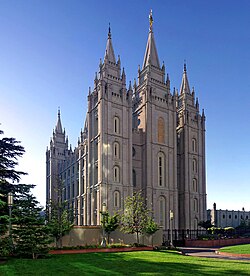
Salt Lake Temple of the Church of Jesus Christ of Latter Day Saints, Salt Lake City, UT, Source/Author David Iliff a/k/a Diliff (License Attribution-ShareAlike 3.0 Unported)
In the investigative series Drugs, Inc.: The Fix, National Geographic explores drug use in several American large cities. The program focusing on Salt Lake City (titled “City of Saints and Sinners”), from which this post is derived, can be viewed on NatGeo TV, Sling TV, DirecTV, Amazon Prime, and elsewhere [1].
Mormonism
The Mormon religion plays a major role in Salt Lake City, which was founded in 1847 by Mormon pioneers. Some 48-49% of Salt Lake County’s population identify as members of The Church of Jesus Christ of Latter-day Saints [2].
The LDS Church is a variant on Christianity, not viewed by most Christians as a legitimate denomination. There are significant differences which will not be detailed here [3]. LDS Church members, however, pride themselves on living sober, conservative, law-abiding lives. The use of illegal drugs, alcohol, tobacco, and “hot drinks” (interpreted as coffee and tea) is strictly forbidden.
Grey Area
Prescription drugs like Xanax, Hydrocodone, Percocet, and the highly prized OxyContin fall into a grey area, and are mistakenly viewed as “safe”, since they are physician recommended. The attraction for users is that these provide chemical relaxation (until addiction develops).
When funds for costly opioids run out, there is a rapid transition by addicts to the less expensive alternatives of heroin and methamphetamine.
Secrecy and Rationalization
There is a heavy focus in the LDS Church on success, and maintaining an appearance of perfection. For that reason, drug abuse is never acknowledged and never discussed. For fear of public exposure, families will frequently hide drug paraphernalia before allowing EMTs to treat individuals who have overdosed.
Such secrecy protects drug users and drug dealers alike (creating a high profit/low risk environment for the latter). Read more…

Row Houses on Poplar Street, Philadelphia, PA, Author Davidt8 (PD)
The following is excerpted from the Fall Edition of Ministry Briefs 2025, the newsletter of Christian Legal Clinics of Philadelphia (CLCP) https://clcphila.org, a faith based organization for the poor whose predecessor I was privileged to co-found. The article is by Brendon Sylvester, the Christian Legal Clinics Administrator.
Please, consider donating to CLCP, if you are able. And, please, do pray for the poor.
“Often, when our clients come to us, their legal troubles are the smallest among an army of troubles. Pamela came to us with an estate issue: her sister wanted to cut her out of the administration of a parent’s estate…But she was also going through immense mental health difficulties related to being harassed and bullied at her job. It had gotten so intense that she had taken medical leave due to depression and post-traumatic stress.
The week of the clinic, she had a full breakdown. And though was was able to pull herself together just enough to make it to our clinic, she was visibly struggling. Our attorney, Keith…asked about why she was on medical leave. ‘I mentioned something,’ she said later, ‘and the Holy Spirit tole him I was in a deep, dark place.’ Keith, who’s a deeply faithful man, turned the legal advice session into a pastoral guidance session. ‘He told me, “you cannot return to the workplace. You’ll be triggered and you will relapse…'”
It was bold of him to give that advice. But it was exactly what Pam needed. ‘I knew I couldn’t go back,’ she said. ‘He saved my life.’
After that, she kept coming back to CLCP. She had multiple consultations, had her own estate documents drafted, and brought family and friends to us with their legal issues. Finally, in 2024, she started volunteering with us as a scheduler for one of our clinics. ‘I’m very intentional about where I volunteer,’ she said. ‘I volunteer where my values are.’ Pam saw God move through Keith to touch her life. Her response was to place herself so that God could move through her to touch the lives of other CLCP clients.”
READERS CAN FIND MY VIEWS ON ABUSE AND ABUSE-RELATED ISSUES AT A Voice Reclaimed, Surviving Child Abuse and More
https://avoicereclaimed.com
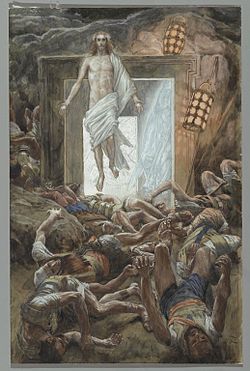
“The Resurrection” by James Tissot (1886-1894), Brooklyn Museum (Accession No. 00.159.328), Source/Photographer Online Collection https://brooklynmuseum.org/collection (PD)
“But he said to them, ‘Do not be alarmed. You seek Jesus of Nazareth, who was crucified. He is risen! He is not here. See the place where they laid Him’” (Mark 16: 6).
Wishing you all a Happy Easter!
READERS CAN FIND MY VIEWS ON ABUSE AND ABUSE-RELATED ISSUES AT A Voice Reclaimed, Surviving Child Abuse and More
https://avoicereclaimed.com
“Am I a stone, and not a sheep, That I can stand, O Christ, beneath Thy cross, To number drop by drop Thy blood’s slow loss, And yet not weep?
Not so those women loved Who with exceeding grief lamented Thee;
Not so fallen Peter, weeping bitterly; Not so the thief was moved;Not so the Sun and Moon Which hid their faces in a starless sky,
A horror of great darkness at broad noon – I, only I.Yet give not o’er, But seek Thy sheep, true Shepherd of the flock; Greater than Moses, turn and look once more And smite a rock.”
–Christina Rossetti, “Good Friday”
READERS CAN FIND MY VIEWS ON ABUSE AND ABUSE-RELATED ISSUES AT A Voice Reclaimed, Surviving Child Abuse and More
https://avoicereclaimed.com

Fourth Station of the Cross, Christ Meets His Mother, Via Dolorosa, Jerusalem, Author Anton 17, (CC BY-SA 3.0 Unported)
The Stations of the Cross commemorate select events during Christ’s final hours [1][2]. The Stations originate from the Via Dolorosa in Jerusalem, a processional route tracing the path Christ followed on His way to Calvary.
Generally displayed around a church as individual paintings or carvings, the Stations of the Cross serve as the basis for a devotional often observed during Lent. Prayerfully considered, the Stations afford believers an opportunity to reflect in a profound way on Christ’s suffering and His sacrifice for them [3][4][5][6].
The denominations which observe the Stations of the Cross include the Roman Catholic Church, Anglican Church, Lutheran Church, and Methodist Church. Read more…
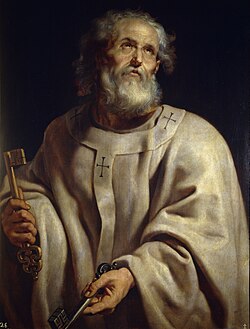
“The Apostle Saint Peter” by Peter Paul Rubens (1610-1612), Museo del Prado (Accession No. P001646), Source/Photographer Uploaded to en.wikipedia by Wlkernan (PD)
St. Peter, originally called Simon, was a native of Bethsaida, a Jewish village near the Sea of Galilee [1][2]. This would suggest that he came from humble beginnings. The Gospels, also, suggest that he had a fiery disposition.
Appropriately enough, Peter and his brother Andrew were fishermen. Instead, Christ invited them to become fishers of men (Matt. 4: 18-20).
Betrayal
Peter walked with Christ throughout the three years of His earthly ministry, hearing Him teach and witnessing countless miracles. Peter was present at the Last Supper. Yet, Peter betrayed Christ three times on the very night He was arrested (Matt. 26: 69-75; Mark 14: 66-72; John 18: 17-27).
Forgiveness
Following the Resurrection Christ forgave Peter for this betrayal (John 21: 15-17). It must though have remained on Peter’s mind.
Early church sources including Origen, Irenaeus, and Eusebius hold that Peter was crucified upside down around 64 AD [3]. It is believed that he asked to be crucified in this way, feeling unworthy to be put to death in the same manner as the Lord.
Humility
“…Clothe yourselves, all of you, with humility toward one another, for ‘God opposes the proud but gives grace to the humble’” (1 Peter 5: 5).
Peter, a recognized leader of the Apostles and considered by the Roman Catholic Church the first pope, is the patron saint of fishermen, netmakers, and ship builders. But his epistles emphasize humility [4]. His personal journey from pride to humility is a profound lesson to Christians everywhere.
The washing of the feet is a ceremony that commemorates Christ’s washing of the Apostles’ feet before the Last Supper (something Peter initially resisted) (John 13: 12-18). It is observed in various Christian denominations on Maundy Thursday during Holy Week, as a reminder to believers of the importance of humility.
Altarpiece
All of which makes it entirely fitting that an altarpiece featuring the image of a homeless man as St. Peter is now on display at the Vatican [5]. Read more…


