“Oh! I have slipped the surly bonds of Earth,
And danced the skies on laughter-silvered wings;
Sunward I’ve climbed, and joined the tumbling mirth
Of sun-split clouds, and done a hundred things
You have not dreamed of – wheeled and soared and swung
High in the sunlit silence. Hov’ring there
I’ve chased the shouting wind along, and flung
My eager craft through footless halls of air…
Up, up the long, delirious, burning blue
I’ve topped the wind-swept heights with easy grace
Where never lark or even eagle flew –
And, while with silent lifting mind I’ve trod
The high untrespassed sanctity of space,
Put out my hand, and touched the face of God.”– High Flight by John Gillespie Magee, Jr. [1]
Human beings have always been seekers. We have always been restless. We cannot help but wonder what may be found over the next horizon. New places call to us, and it is in our nature to respond.
So mankind migrated from continent to continent, crossing land bridges on foot, trackless wastes of ice by dog and reindeer sled, and vast oceans by canoe and longship. We learned to navigate by the stars, then realized the air was another realm to be conquered.
Kitty Hawk led to the Sea of Tranquility in less than 70 years. We broke the sound barrier, then what some have called the surly bonds of earth. Now our goal is farther still and we aim at the stars, themselves.
Even exploration on so grand a scale has not satisfied our restless curiosity. The search for something unseen, unknown, has inspired us to investigate the world around us on an atomic level, and the human body on a molecular level.
In the process, we have discovered the relationship between energy and matter, and the relationship between time and space. We have split the atom, and mapped the human genome.
And we have studied ourselves – giving rise to fields from anthropology and sociology to philosophy, psychology, and psychiatry. Still we seek new challenges, new frontiers.
To varying degrees, the journey of exploration is replicated in each human life. We search for identity. We search for connection. We search for meaning and purpose…higher mountains to climb.
All this wandering – this wondering – is not pointless. This searching has not been in vain. However much it may have benefited mankind, it is reflective of a greater longing.
“And you will seek Me and find Me, when you search for Me with all your heart” (Jer. 29: 13).
—
[1] John Gillespie Magee, Jr. was a 19 year old World War II pilot serving in the Royal Canadian Air Force. He was killed in an aerial accident 4 months after having written High Flight.
READERS CAN FIND MY VIEWS ON ABUSE AND ABUSE-RELATED ISSUES AT ANNA WALDHERR A Voice Reclaimed, Surviving Child Abuse
https://avoicereclaimed.com

Residents on roof of flooded home after Hurricane Katrina (2005), Source FEMA Photo Library, Author Jocelyn Augustino (PD- Fed. govt.)
“When you pass through the waters, I will be with you; and through the rivers, they shall not overflow you” (Is. 43: 2).
The power of water should not be underestimated.
Floods damage homes, businesses, vehicles, cropland, and infrastructure. Floods take lives, drown livestock, contaminate drinking water, and spread waterborne illnesses like cholera, typhoid, and dysentery. Economic hardships due to flooding include food shortages, rebuilding costs, and a decline in subsequent tourism.
The worst natural disaster in the United States in terms of fatalities was the Great Hurricane of 1900 in Galveston, Texas. Some 6000 – 12,000 were killed by storm surge and coastal flooding. Ten years ago this month, over 1500 died in Hurricane Katrina.
Tsunamis or tidal waves are considered a form of flood. What distinguishes tsunamis from most other natural disasters is that there is no upper limit to the losses they can cause [1]. The 2004 Indonesian tsunami killed more than 230,000 people.
But the power of the Lord is greater still. We have no standard to which He can be compared. In the most dire of circumstances, when all hope is gone, He can make a way.
We are beneficiaries of God’s covenant with Noah, His promise that the waters will never again become a flood to destroy all flesh (Gen. 9: 15). That covenant has broader application than natural disasters alone. It signifies that the Lord is a holy and faithful God who will not let sin go unpunished forever.
In times like these, when chaos threatens to overwhelm the world, we can trust that God will fulfill His promise. Like David, we can say, “If it had not been the Lord who was on our side, when men rose against us…then the waters would have overwhelmed us, the stream would have gone over our soul…Blessed be the Lord…” (Ps. 124: 2, 4, and 6).
—
[1] Australian Earthquake Engineering Society, “Some Reflections on the Insurance Aspects of Tsunami Damage” by George Walker, 11/5/13, http://www.aees.org.au/wp-content/uploads/2013/11/05-Walker.pdf.
READERS CAN FIND MY VIEWS ON ABUSE AND ABUSE-RELATED ISSUES AT ANNA WALDHERR A Voice Reclaimed, Surviving Child Abuse
https://avoicereclaimed.com

Dwarf elliptical galaxy M32, Credit 1.1 Meter Hall Telescope, Lowell Observatory, Bill Keel (University of Alabama)
The number of stars in the universe tripled in 2010. That is not actually true, of course. Only our estimate of the number tripled.
Yale astronomer, Pietur van Dokkum and his team used the Keck Observatory in Hawaii to survey eight elliptical galaxies for red dwarfs (a class of small, “cool” stars). Since red dwarfs cannot be readily detected, astronomers until now estimated their number based on the proportion of such stars found in our own Milky Way galaxy.
Dr. van Dokkum’s study determined there may be five to ten times more red dwarf stars in elliptical galaxies than previously believed. That triples the total count to 300 sextillion (3 followed by 23 zeros or 3 trillion times 100 billion).
Feel insignificant yet?
“ ‘Where were you when I laid the foundations of the earth?
Tell Me, if you have understanding.
Who determined its measurements?
Surely you know!
Or who stretched the line upon it?
To what were its foundations fastened?
Or who laid its cornerstone,
When the morning stars sang together,
And all the sons of God shouted for joy?’ ” (Job 38: 4-7).
How great You are, Lord God! How small and weak are we, by comparison.
Teach us Your astronomy, Lord. Your power extends to the most distant star. Yet Your love is offered to the least of us. Before time existed, You were. Yet you chose to die that we might live.
We praise Your holy Name!
Amen
READERS CAN FIND MY VIEWS ON ABUSE AND ABUSE-RELATED ISSUES AT ANNA WALDHERR A Voice Reclaimed, Surviving Child Abuse
https://avoicereclaimed.com

Starving child, relief camp, Nigerian-Biafran War, Source Centers for Disease Control, Author Dr. Lyle Conrad (PD-Federal govt.)
The CBS game show “Survivor” has become a staple. The program isolates a group of men and women in a tropical locale, who then compete for cash and prizes. The show has been nominated for several Emmy Awards. Potential contestants vie to be on.
The Discovery Channel now has a program entitled “Naked and Afraid”. An unclothed couple attempts to locate food and craft shelter. Viewers are offered titillation in the guise of “adventure” and scientific inquiry.
The History Channel is this summer presenting a program entitled “Alone”. Survivalists live on their own in a wilderness area with limited equipment.
This is so called “reality” television. Apparently, Americans have become so bored (and disconnected from genuine risk) that we must take vicarious pleasure in the artificial challenges set for strangers in quasi-scripted settings.
While we entertain ourselves, there are those in the world who must deal with real challenges.
- Very nearly half the people on earth live on less than $2.50 per day [1].
- 21,000 children worldwide die each day from a combination of poverty, malnutrition, and easily treatable disease [2]. That is one child every four seconds [3]. Some 1.8 million children die each year of diarrhea alone [4].
- More people have access to a cell phone than a toilet [5].
These figures do not take into full account the casualties of war, or the suffering of those made refugees by war.
Greatly blessed, we are numbing ourselves to the needs of the world, to the grim reality others face daily. But that cannot last. Moses warned Israel, too, of approaching judgment.
“For they are a nation void of counsel, Nor is there any understanding in them” (Deut. 32: 28).
—
[1][2][4] Global Issues, “Poverty Facts and Stats” by Anup Shah, 1/7/13, http://www.globalissues.org/article/26/poverty-facts-and-stats.
[3] Global Issues, “Today Around 21,000 children died around the world” by Anup Shah, 9/24/11, http://www.globalissues.org/article/715/today-21000-children-died-around-the-world.
[5] Time, “More People Have Cell Phones than Toilets, UN Study Shows” by Yue Wang, 3/25/13, http://newsfeed.time.com/2013/03/25/more-people-have-cell-phones-than-toilets-u-n-study-shows/.
READERS CAN FIND MY VIEWS ON ABUSE AND ABUSE-RELATED ISSUES AT ANNA WALDHERR A Voice Reclaimed, Surviving Child Abuse
https://avoicereclaimed.com

“Gideon and His 300” (Judges 7: 9-23), (1907), Source http://thebiblerevival.com/clipart/1907/judges7.jpg, Author Providence Lithograph Co., (PD-US)
You may recall that before battle Gideon was instructed by God to reduce his forces from 32,000 to 300 men.
Who among us would have the faith – and courage – to do this? Yet Gideon did, so that the glory of victory would be the Lord’s alone. Victory, in fact, followed with God striking fear into the enemy at the sound of Gideon’s trumpets.
What does this teach us?
First, God does not look to our weakness, but rather His strength. Gideon’s leadership credentials were not impressive in a worldly sense. He was the youngest in his father’s house, and came from the weakest clan in the tribe of Manasseh. Still the Lord favored him.
Second, God knows our nature, and is merciful toward us. Gideon was very human. His reaction to news of the Lord’s favor was cautious, at best. Gideon asked twice for confirmation which God gave him.
Third, we may be called on to step out in faith, when reason would dictate otherwise. Gideon could “reasonably” have declined the Lord’s direction. Instead, he chose to act on God’s assurances. Despite his doubts. Despite his fears. That took real courage. Read more…

Bombing by Boko Haram 4/14/14, Source Voice of America (PD-US federal govt.)
WARNING: Graphic Images
Below is an excerpt from the August 2015 edition of the Voice of the Martyrs Magazine. VOM, http://www.persecution.com, is a Christian non-profit serving the persecuted church.
The events described are brutal. The faith of this 13 y.o. boy stands in sharp contrast. It should be humbling to the rest of us.
“Danjuma Shakaru’s…face is marked by horrendous scars…and by a beaming smile…He remembers running for his life and then being confronted by some of the more than 1,000 Islamic insurgents who attacked his Christian village, burning homes and killing villagers who didn’t manage to escape…
Danjuma can’t recall the attackers hacking at his left arm with a machete. He has no memory of them cutting out his right eye. And he doesn’t remember them cutting off his genitals.
Danjuma is among the thousands of Nigerians who have been brutalized in violent riots, bombings and village raids since 1999, when Islamists began their campaign to establish Islamic [Sharia] law and an Islamic territory in the north. The Insurgency escalated in 2009 with the rise of the extremist group Boko Haram…
In spite of what he has suffered, Danjuma is certain that God is still in control…Danjuma not only forgives his attackers but almost pities them for the condition of their hearts.
‘I forgive them because they don’t know what they are doing,’ he said, echoing the words of Christ. ‘If they had love, they wouldn’t behave that way.’ Read more…
A study of racial and ethnic hate groups by the Southern Poverty Law Center, in conjunction with the American Communities Project, suggests that the factors contributing most toward racism and ethnic hatred in a given geographic area are low income and high population diversity [1].
This would appear on its face to be counter-intuitive. Surely, those with little to defend would find common cause with those of differing race or ethnicity confronting similar challenges. That does not, however, seem to be the case.
Where resources are few, they are bitterly contested – all the more so, if differing groups lay claim to them. And hate thrives.
This is how Mark Anthony Neal, a professor of African-American studies at Duke University, explains the situation:
“Very often…there’s an expectation that if you go to school in diverse neighborhoods that you would have the least amount of friction around race. But just because folks are going to school with people of the opposite race doesn’t mean that families are talking about race in a productive way…You’re talking about communities of folks who are all struggling for the same amount of resources. They may blame another group for not having access to those resources.”
Communities living in poverty, with close contact between those of different racial or ethnic backgrounds, can be found throughout the deep South and Bible Belt – in states such as Arkansas, Kentucky, Tennessee, Missouri, and Oklahoma. The South, of course, has a long history of racial problems (extending from the Civil War, to Jim Crow, to present day disputes over voter registration).
What the demographics imply is that prejudice and xenophobia have deep economic roots which education alone does not overcome. Sadder still, the presence of Evangelical Christians in many of these communities has not eliminated the threat of violence.
—
[1] NBC News, “The Two Big Factors that Determine Where Hate Groups Thrive” by Dan Te Chinni, 7/7/15, http://www.nbcnews.com/meet-the-press/two-big-factors-determine-where-hate-groups-thrive-n387631.
READERS CAN FIND MY VIEWS ON ABUSE AND ABUSE-RELATED ISSUES AT ANNA WALDHERR A Voice Reclaimed, Surviving Child Abuse
https://avoicereclaimed

Stained Glass Window, Collegiale Notre-Dame de Dinant (Collegiate Church of Our Lady of Dinant), Belgium: “Adam and Eve Driven from Paradise” (13th Century), Author Vassil (CC0 1.0 Universal PD Dedication)
The concept of original sin is a thorny one. Some believe in a Creator and the story of creation as told in the Book of Genesis. Others believe firmly in evolution. Some view men and women as basically good. Others fundamentally disagree.
Flawed
We can argue over terminology, dispute the innocence of babes, and debate the origins of the flaw in our nature. But most people would agree that mankind is – at least in a global sense – flawed.
Depending on your viewpoint, that may or may not be a statement on morality. It is without question a description of the human condition.
We are capable of creating paintings and sculptures of surpassing beauty. We have literature and poetry to our credit, along with philosophy, medicine, and science. We are not unfamiliar with altruism. Some sacrifice their very lives for the sake of others.
Rarely though has there been a generation without war, even to the point of genocide. Never has crime been absent from the human experience – rape and murder included. Add to that poverty and hunger.
Good and Evil
The dichotomy plagues us as a species, whether we choose to believe in God or not. We may prefer to avoid examining the moral dimension to this. A few may go so far as to argue for the benefits of selfishness or the evolutionary basis of infidelity.
We need not, however, worry about imposing “artificial” concepts of good and evil on a child who has been molested. S/he will attest that they exist without prompting. Human beings may not be able to identify the ultimate good. Generally, however, we can recognize evil when impacted by it.
The question of good and evil is as profound as any that exists on earth. Those who have suffered greatly may turn from God in grief or rage, viewing Him as the source of their pain. In the end, however, He offers them the greatest consolation. Read more…
We none of us want to fail. Failure is humiliating, discouraging, and painful. Surprisingly, however, there are blessings that flow from failure. God can even use failure to prepare us for greater things.
Strength
“My flesh and my heart may fail, but God is the strength of my heart and my portion forever” (Ps. 73: 26).
Failure strips us of pride. It forces us to recognize the limits of our strength. But if we turn to God, in our distress, He will lend us His strength – strength which, unlike ours, is infinite.
Heavenly Reward
“ ‘Blessed are you when they revile and persecute you, and say all kinds of evil against you falsely for My sake…for great is your reward in heaven…’ ” (Matt. 5: 11-12).
Failure teaches us that the world’s evaluation of us means nothing; and God’s evaluation, everything.
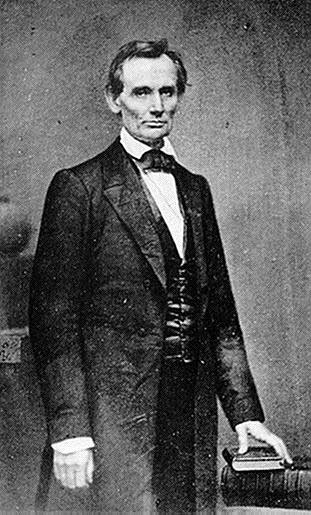
Photo of Abraham Lincoln by Matthew Brady (taken February 27, 1860, the day of Lincoln’s famous Cooper Union Speech), Library of Congress (PD)
When Abraham Lincoln took up politics the results were not entirely promising. He was defeated in his first try for the state legislature in 1832; defeated in his first attempt to be nominated by his party for Congress in 1843; defeated in his application to be Commissioner of the General Land Office in 1849; defeated as a potential nominee for the vice-presidency in 1856; and defeated in attempts to secure a seat in the U.S. Senate, both in 1854 and 1858 [1].
In 1841, Lincoln (who is known to have suffered from recurrent depression) wrote to a friend, “I am now the most miserable man living. If what I feel were equally distributed to the whole human family, there would not be one cheerful face on the earth.”
During the Civil War, Lincoln was forced to deal with one staggering military defeat after another, all the while berated by the press and his political opponents. Lincoln was called a liar, a filthy storyteller, a braggart, an ignoramus, a tyrant, a despot, a usurper, a thief, a swindler, an old scoundrel, and a monster. Gen. George McClellan called him, “Nothing more than a well meaning baboon.”
But Lincoln somehow held the Union together. By then, he could say about criticism:
“If I were to try to read, much less answer, all the attacks made on me, this shop might as well be closed for any other business. I do the very best I know how – the very best I can. And I mean to keep on doing it to the end. If the end brings me out all right, what is said against me will not amount to anything. If the end brings me out all wrong, ten angels swearing I was right would make no difference.”
Lincoln is today recognized as one of the greatest presidents in American history. Read more…

Children at the Salvation Army/Dewald Community Center pledge allegiance to the United States flag, Author Tech Sgt. Joseph Harwood, Source http://www.dvdshub.net/image/1655087 (PD-Federal govt.)
Greatly blessed as she is with natural resources, America’s greatest resources have been her people, her ideals, and her faith. We are at risk of losing all three.
- According to the non-partisan Congressional Research Service, 83 welfare-related programs (excluding Medicare and Social Security) together in 2011 constituted the single largest item in the federal budget [1]. In total, federal spending on these programs was approximately $726 billion [2A]. State spending (primarily on Medicaid and CHIP) constituted an additional $283 billion [2B].
- By 2014, overall federal expenditures amounted to $3.5 trillion [3]. But fourteen cents of every dollar had to be borrowed [4].
Despite this, the gap between rich and poor is widening, millions are working longer hours for less pay, and the middle class is disappearing [5].
What does this tell us? Most will answer that question from their own frame of reference. Those well-off view the nation as well-off; those struggling view the nation as struggling.
Perhaps though the answer to our question is not to be found in figures alone – no matter how finely we may slice and dice them.
If a full third of the national budget (or any fraction approaching that) must be dedicated to welfare-related programs, we are a nation in serious trouble, a nation that is not using its resources wisely. And budget cuts are not the remedy. Read more…

 A Lawyer's Prayers
