
“Massacre of the Innocents” by Leon Cogniet (1824), Source Museum of Fine Arts of Rennes (Accession No. 88.6.1), (PD-Art, PD-Age)
Mala Cumana were apples from the Greek colony of Cumae in Southern Italy picked only at midnight under a full moon, supposedly to imbue them with magical properties [1A][2]. Considered a rare delicacy during the Roman Empire, the apples were preserved in wine, with honey and spices.
King Herod the Great (infamous for the murders of his wife Mariamne and sons, as well as the Massacre of the Innocents recorded in the Bible) is known to have had Mala Cumana packed and shipped 1500 miles to his palace fortress at Masada [1B][3][4].
Luxury Fruit
PlazaFresh, based in the Netherlands, sells apples picked at midnight under a full moon today [5]. In fact, their popularity has continuously increased, since they again became available. Though apples have been associated with magic in many cultures, this seems to have less to do with magic, than with the growing trend of luxury fruit [6A][7].
Noble Fresh Cart sells a single Crown melon – grown on a vine from which every other fruit was pruned, to increase its sweetness – for around $150 [8]. Del Monte offers a Ruby Glow pineapple, packaged as if it were a work of art, for $400 [9A]. Oishii offers a solitary strawberry, grown indoors under special lights, without the use of chemicals, for $2 [9B].
There are legitimate reasons for these prices: selective breeding, intensive farming practices (individual vine tending, and the like), and strict quality controls (implying a high discard rate of less than perfect product) [6B]. Certainly, this amount of care can improve taste. But the attraction of such produce is less about quality, and more about prestige.
Poverty and Malnutrition
According to the US Census Bureau, 37.9 million people were living in poverty in the United States in 2024, over 9 million of these children [10][11]. Malnutrition is closely intertwined with poverty [12]. Children living in poverty rarely have access to fresh fruit and vegetables…let alone luxury fruit. Read more…
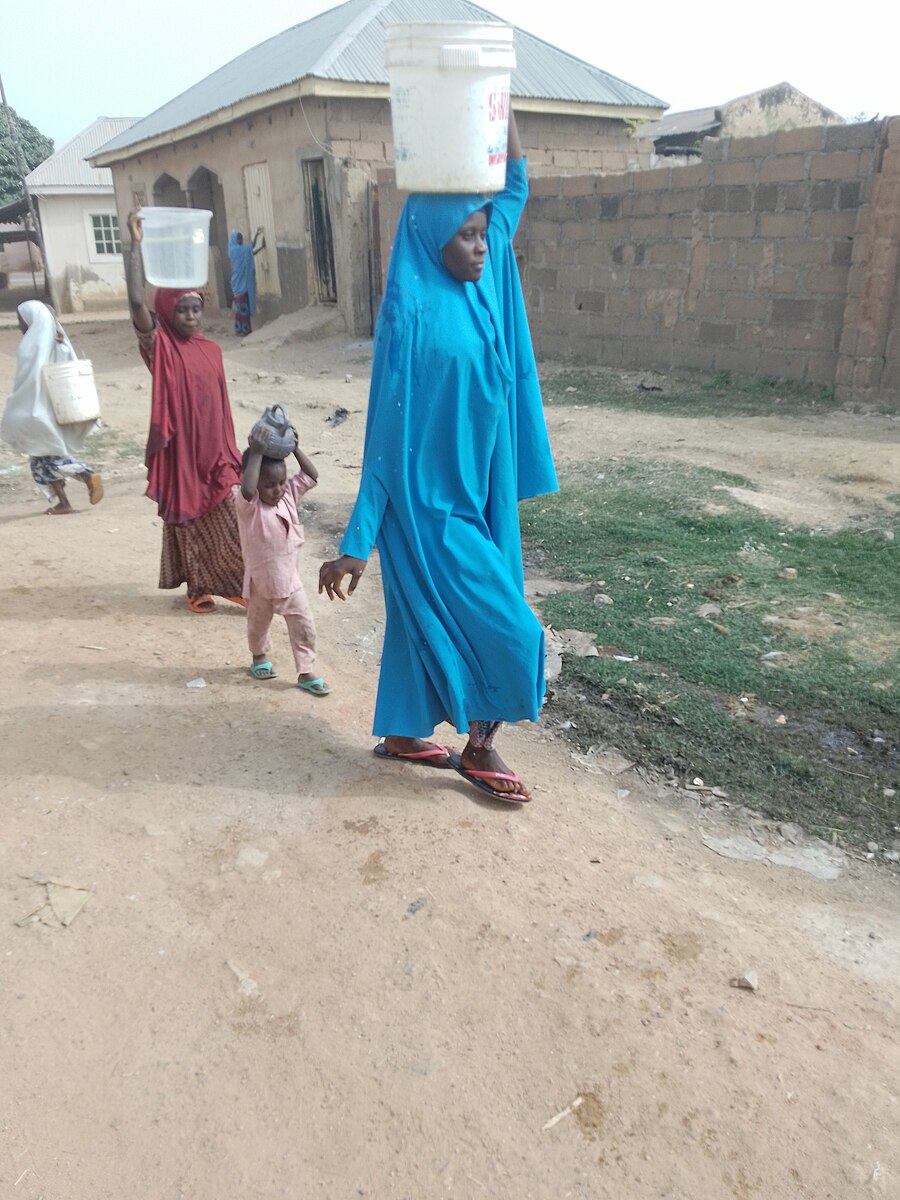
Nigerian women carrying water, Author Shamus08 (CC0 1.0 Universal Public Domain Dedication)
“Religion that is pure and undefiled before God the Father is this: to visit orphans and widows in their affliction…” (James 1: 27 ESV).
- The Fulani Militia are from a nomadic Muslim tribe, based in central Nigeria. As of 2014 the militia were named the fourth deadliest terrorist group in the world by the Global Terrorism Index (the others being Boko Haram, the Taliban, and ISIS-West Africa) [1A]. Fulani Militia target non-Muslim communities, particularly Christians. They attack isolated communities and individuals at their most vulnerable, including men and women working in the fields [1B].
- Boko Haram is a self-proclaimed jihadist terrorist organization based in Nigeria but, also, active in Chad, Niger, Cameroon, and Mali [2][3]. Boko Haram and ISIS-West Africa carry out hundreds of kidnappings and ambushes in Nigeria annually using small arms, captured military equipment, and improvised explosive devices [4].
Islamist attacks have widowed over 10,000 Christian women in Nigeria in the past 20 years [5A]. Many women have young children now left fatherless. Widows may be forced into prostitution, in an effort to feed their children.
Meanwhile, Sudan has the world’s largest hunger crisis and world’s largest displaced population, with nearly nine million people having fled their homes [6]. Neither side in the conflict there – the Sudanese Armed Forces supplied by Iran or the paramilitary Rapid Support Forces – is sympathetic to Christians, giving Islamist extremists greater opportunity to target them [7][8]. Sudanese Christians from a Muslim background are at particular risk. Read more…

Image courtesy of Pixabay, Author TyliJura
“Apart from Christ there is no art, no science, no technology, no agriculture, no microprocessor, and no medical innovation. If God is the center of our life, technology is a great gift. If technology is our savior, we are lost.”
–John Piper, author of “Desiring God“
Technology is neither a threat to God, nor inherently adverse to Him. How we view and apply technology is what matters. Both David and Goliath employed the technology of their day. So, of course, did Hitler.
Surveillance cameras, smart phones, and electronic vehicles all reflect recent rapid advances in technology. The pace of change can at times feel overwhelming.
And technology can alter the way we see ourselves, dehumanizing us if we allow it to do that. Despite artificial intelligence’s potential benefits for productivity, medicine, and national defense, AI can diminish the importance we place on human beings.
Technology can, also, inflate our egos. We may begin to believe that science is superior to religion, even that we have become gods.
Both these extremes feed into today’s Transhumanist Movement. Transhumanism is a philosophic and scientific movement aiming to utilize technology to exceed normal biological limitations and extend human lifespan [1]. Julian Huxley originated the concept in 1957. Read more…

Practitioner of Falun Gong in meditation, Author Joffers951 (CC BY-SA 4.0 International)
Falun Gong is a religious cult founded in the 1990s by Li Hongzhi [1]. An autocratic leader, Hongzhi is viewed by his followers as a godlike figure who can levitate, pass through solid objects supernaturally, and foresee the future.
Falun Gong teachings are ultra-conservative. Medicine, science (which Hongzhi has attributed to aliens), and art are rejected. The unchanging cosmos is said to be the determinant of good and evil. Different ethnicities are each thought to have a corresponding heaven.
Reincarnation is an accepted tenet. Human beings are described as originally good by nature – even divine – but having descended into delusion and suffering through selfishness and the accumulation of negative karma.
Falun Gong followers are to do good deeds, and bear patiently with opposition. Devotees are told they “progress” spiritually by means of virtue, meditation, and the practice of a set of exercises. But homosexuals are seen as “unworthy of being human”.
Falun Gong followers are instructed to downplay the controversial aspects of Hongzhi’s teachings and emphasize the values of truth, compassion, and tolerance, when speaking with outsiders. They have been persecuted by the Communist Chinese government, which sees Falun Gong as a threat. Read more…

Poster encouraging participation in civilian defense during World War II, Source http://digital.wolfsonian.org/WOLF000142/00001, Author Herbert Matter (PD as work product of US Federal Govt.)
“But the woman was given two wings of a great eagle, that she might fly into the wilderness to her place, where she is nourished for a time and times and half a time, from the presence of the serpent” (Rev. 12: 14).
Some of us can no longer watch films about this nation’s history – the American Revolution, the Civil War, the Great Depression, World War II.
Watching such films used to bring tears to our eyes at the sacrifices made by earlier generations, and the achievements in the name of freedom and equality. Loving America as we do and seeing her so divided, watching those films now is simply too painful. We recognize all too clearly what has been lost.
Christians may console themselves with thoughts of the Rapture, the promise that Christ will collect all believers, living and dead, and take them to be with Him in heaven (Mark 13: 26; 1 Thess. 4: 13-17). And there is consolation in that. But the sense of loss remains.
Interestingly, Christian do not all agree on when the Rapture will take place: Pre-Tribulation [1], Mid-Tribulation, or Post-Tribulation. Protestant denominations tend to hold to a Pre-Tribulation Rapture. Catholics hold to a Post-Tribulation Rapture.
There is disagreement, too, over whether America appears in the Bible. The majority of eschatologists feel it does not. A small number differ. Read more…

Fruits on display at market, Author Dungodung (PD)
“…’You shall love your neighbor as yourself” (Matt. 22: 39).
Often, those of us not raised in dire poverty fail to understand the chaos of that environment.
The electricity is turned off, and homework is not done. The ceiling falls in, literally. The grocery bag rips, the eggs smash, and there is no dinner.
Children sleep in the bathtub as their only defense against drive-by shootings.
An intoxicated neighbor sets the house on fire. An argument over sneakers escalates into a shooting. Police arrest a parent, and the children go into foster care.
There are no safety nets. There are no margins for error. What to the rest of us might be an inconvenience, at worst a minor hardship, can be devastating to the poor. Progress is impossible. A youthful indiscretion may cost a life.
Is there any wonder that long range consequences are imperfectly understood? These children have not been in a position to predict from one hour to the next what may befall them.
Poverty and PTSD
Children in poverty face constant disappointment, and daily discouragement from the adults around them. Promises must be broken again and again.
Some of the criticism may actually be an attempt by adults to protect their children against the bias they are expected to face. Underachievement is perceived as “safer” than success.
Not all such criticism is intended, however, to be benign. Many adults – themselves defeated by poverty – view the potential achievements of others as an indictment, a reflection on their own efforts.
This repeated exposure to unexpected trauma, this constant barrage of negative feedback, results not only in insecurity, but Post Traumatic Stress Disorder and depression. There is no one to rely on, and no escape.
Poverty and Families
Poverty places enormous stress on families which are already vulnerable. This is not meant to imply that the poor are incapable of feeling.
Parents living in poverty desire the same advantages for their children they see enjoyed by others. This can, itself, lead to bad decisions. What little money there is available may be expended on a large screen TV, computer equipment, or other electronics, while the family struggles to keep food on the table.
Moreover, the problems of parents are passed onto and replicated by their children. A mother, whose own credit has been exhausted, may take out credit cards in the names of her minor children, thereby saddling the children with a marred credit history before they are old enough to read.
The future is sacrificed to the present. Read more…

Emerald and Diamond Necklace by Cartier, Source https://www.flickr.com, Author thisisbossi, (CC BY-SA 2.0 Generic)
“For what will it profit a man if he gains the whole world, and loses his own soul?” (Mark 8:36).
There are few happy endings.
Nearing forty, Aretha is today the mother of two sons, the younger boy autistic. Neither son is in contact with his father. Jonathan’s father is incarcerated. The younger boy’s father is disinterested, though he does pay court ordered child support.
A psychiatric aide throughout her working life, Aretha has faithfully served those suffering from mental health issues of every kind.
For little more than minimum wage, she has sat with the friendless, comforted the despairing, and fed the elderly no longer able to care for themselves. She has changed soiled bed linens, and wiped up vomit — bringing her own cleaning supplies from home to disinfect patient rooms during the Covid-19 crisis.
Ironically, obtaining access to the special education supposedly guaranteed Aretha’s younger son by the state has been nearly impossible for her.
Because of cancer, Aretha, herself, now lives on Social Security Disability. Keeping the wolf from the door is a constant challenge, as is the battle with government bureaucracy and insurance company red tape.
Again in Philadelphia after a brief foray into the suburbs, Aretha cannot always manage to cover the mortgage on the row house she purchased here. This places her at continual risk of foreclosure. Because of a meager cost of living increase to her disability benefit, her household food stamp (SNAP) allotment was recently reduced from a ludicrous $11/month to zero. She had to go months without her cancer medication.
Despite all this (and innumerable other obstacles), Aretha has for the past 20 years continued to pursue a biology degree. She remains short of her goal.
Some classes Aretha failed or abandoned in favor of work. Those had to be taken again (at additional cost). At least one school she attended went under. More than once credits could not be transferred, when she changed schools. Due to the passage of time and changes in curriculum over which she had no control, some credits Aretha originally earned are no longer eligible toward a degree.
The effort has left Aretha with more than $50,000 in student loan debt.
Having seen his mother’s struggles, Jonathan is pursuing a career in the military.
Tyrell died after years spent as an addict on the streets.
Poverty in America
In cities across this country, there are children like Jonathan and Tyrell. Each day that passes, they spend another day of their lives in poverty. Each day another generation is being lost.
According to the US Census Bureau, 35.9 million people in America live below the poverty level [1]. Of those 11.9 million are children [2]. The figures do not take into account children in foster care, prisoners, the elderly in nursing homes, those living in military housing, or the homeless not in shelters.
Hunger in America
I could cite other statistics.
- According to a 38-city study by the US Conference of Mayors in 2016, emergency kitchens and food pantries in 47% of the cities surveyed had to reduce the quantity of food persons could receive at each visit and/or the amount of food offered per meal [3A]. That was before the Covid-19 pandemic which placed additional strain on such facilities.
- In 29% of the cities surveyed, emergency kitchens and food pantries had to reduce the number of times a person or family could visit each month [3B].
- About 13.8% of emergency food requests went unmet because of a lack of resources, and people were turned away [3C].
According to the Bread for the World Institute, the nation’s largest network of food banks, more than 40 million Americans (including 12 million children) live with hunger on a daily basis [4][5].
Feeding America, the nation’s largest network of food banks, reports that over 23 million men, women, and children rely on its services [6A]. Some 36% have to choose between buying food and paying for housing [6B].
Unwed Mothers/Absent Fathers
By 2015, 77.3% of African American women giving birth were unmarried (as compared with a national rate of 39.8% across all racial and ethnic lines in 2022) [7][8].
The studies on father absence are too numerous to discuss here [9].
Suffice it to say that absence has been linked to earlier sex, higher rates of pregnancy, and higher divorce rates among the children of absent fathers. It has been shown a driving factor behind poverty, drugs, crime, illiteracy, Welfare reliance, and homelessness.
A Personal Stake
I heard a woman from one of our more affluent suburbs comment about the survival of Philadelphia, “I don’t feel I have a personal stake.” She could not have been more wrong.
We all of us have a personal stake. These are our children. White, black, brown, red, yellow or any combination, these are our children. We cannot relegate them to the ash heap.
Not only do they have inherent value, there is an associated cost — a cost in lost earnings and productivity; in lost talent and ideas; in increased burden on public assistance; and in increased burden on law enforcement, state and federal judicial systems, and penal systems nationwide. Read more…

Portrait said to be of Christopher Columbus by Sebastiano del Piombo (1519), Metropolitan Museum of Art (Met Object No. 437645), (PD)
“And we know that all things work together for good to those who love God, to those who are the called according to His purpose” (Rom. 8: 28).
Aretha fondly calls me “Columbus”, always getting lost but inclined to come across something extraordinary, on the way.
It was at her place in December of 2005 that it happened to me again. I had been greatly discouraged about work, worried that my life might be pointless. Try as I might, I couldn’t seem to find my way.
Aretha and I were comparing notes about our respective childhoods, when I voiced this concern to her. “Wha’ da ya’ mean?” Aretha asked. “You’re exac’ly where you’re supposed ta be! Right here, right now, this minute. This is the place you’re supposed ta be.”
And she was, once again, right. Despite many a detour, I was – by accident or Design – in exactly the place I was supposed to be.
I had started at the legal clinic in the hope of balancing the scales of justice, and bringing Christ to those who did not yet know Him. Instead, I found my efforts the merest drop in the bucket, the problems so much larger than I alone could fix. But saw Him mirrored in every face.
We are all connected. We are all members of a single family. We may look a little different from one another. That’s all.
As Aretha would say, “Don’ matter.”
Copyright © 2010 – Present Anna Waldherr. All rights reserved.
READERS CAN FIND MY VIEWS ON ABUSE AND ABUSE-RELATED ISSUES AT ANNA WALDHERR A Voice Reclaimed, Surviving Child Abuse
https://avoicereclaimed.com
“Command those who are rich…not to be haughty, nor to trust in uncertain riches but in the living God…Let them do good, that they be rich in good works, ready to give, willing to share…” (1 Tim. 6: 17-18).
Before Wall Street speculation caused the real estate market to crash in 2008, gentrification was already changing the face of Philadelphia [1].
House “Flipping”
Residential tax abatement stimulated construction while holding property tax assessments at pre-development levels for a full ten years. This allowed urban professionals in their twenties and thirties to take up real estate “flipping”, something from which they profited handsomely in Fishtown and elsewhere before the market collapsed.
Old structures were converted into luxury lofts and condominiums. Town houses were designed to lure the middle class to long-depressed areas of the city. Newly developed areas in Northern Liberties and Old Kensington in North Philadelphia can attest to the fact.
Displacement
One of the forces behind renovation was Temple University which had purchased large tracts of land in some of the city’s most blighted and crime-ridden areas. For this it was both lauded and reviled.
A big part of the reason was that neighborhood “improvement” often meant displacement [2]. Philadelphia Weekly reported that housing prices in Old Kensington doubled between 1997 and 2002, necessitating that long-time residents disperse and seek affordable housing elsewhere. Safety was gained; collective memory (and the original community) lost.
A local councilman described the dilemma this way, “Do nothing and let the neighborhood deteriorate, or try to improve the neighborhood [3].”
He went on to introduce bills in support of rezoning in Brewerytown. The purpose of these bills was to establish a new zoning designation, “Industrial Transformation District”, and establish the first such ITD in Brewerytown.
The bills would have eliminated both the need for public hearings on rezoning, and the power of zoning boards to overrule rezoning decisions. That would have allowed developers to propose any type of use – whether residential or commercial – irrespective of adjacent land use. In effect, it would have deprived local communities of a say on redevelopment – a say in their own futures.
There was vocal opposition by community-based organizations.
“Drug Reality” Tours
The Kensington Welfare Rights Union – a group determined to seek economic justice for the homeless and working poor – for a time ran so called “drug reality” tours [4]. These tours transported busloads into Kensington to witness “up close” the effects of drug trafficking on the community.
Members of the KWRU viewed corporate investment as using the nation’s drug epidemic to their economic advantage, with little or no regard for the underprivileged. Not all, of course, would agree with this radical viewpoint.
A few, however, have put forward an even sadder theory. Read more…

Community College of Philadelphia, Author Jim.henderson, (CC BY-SA 4.0 International)
“I will instruct you and teach you in the way you should go; I will guide you with My eye” (Ps. 32: 8).
Aretha sat beside me in the waiting room, radiating annoyance and nerves. We had arrived early with the intention of registering her for college…yet again. This was to be Aretha’s third try at completing a semester, this time at a community college.
The room, in contrast to Aretha’s mood, was bright and cheerful, with student art displayed on the walls. However, the counselor who would be interviewing prospective students was late in arriving.
Aretha took the delay as a personal affront. “This is stupid,” she said from a slumped position in her chair, arms crossed stubbornly across her chest.
“She’ll be here soon, I’m sure. She must know there are students waiting.”
“Let’s go.”
“It can’t be more than another few minutes. Why don’t you get some coffee, hon?”
“I don’ wanna sit here, jus’ doin’ nothin’.”
“We’re here now. Let’s hang around awhile.”
“Who wants to go here anyway?” Aretha asked, rising from her chair to pace.
“It’s a start. If you keep your grades up, you can transfer to a four-year school after your sophomore year.”
“I’m leavin’.”
“Come on. We planned on being here, after all. We haven’t got anything better to do.”
I coaxed and cajoled, while Aretha fumed, her anxiety obvious. There was some cause for this.
Aretha had enrolled in college courses unsuccessfully before. Each time, excited at the prospect and eager to move forward with her life, she had loaded up heavily on credits. Regardless of what anyone else said, Retha was sure she could manage a full contingent and work full-time, if she just tried hard enough.
But the educational ladder can be a slippery one. Again and again, Aretha failed to attend the minimum number of classes, incurring additional debt in the process. Again and again, she lost credit transferring from one school to another.
I initially assumed these failures stemmed from childcare issues, the absence of anyone with whom Aretha could reliably leave Jonathan when he was young. To some extent that was true. Fear of failure and fear of success may, also, have been factors.
But Aretha’s need for employment was her most pressing concern. She could not afford to turn away work, even if that meant falling asleep in class after an all-night shift. Eventually, she would end up skipping class and dropping out. Read more…

 A Lawyer's Prayers