“Why Greek?” by Don White
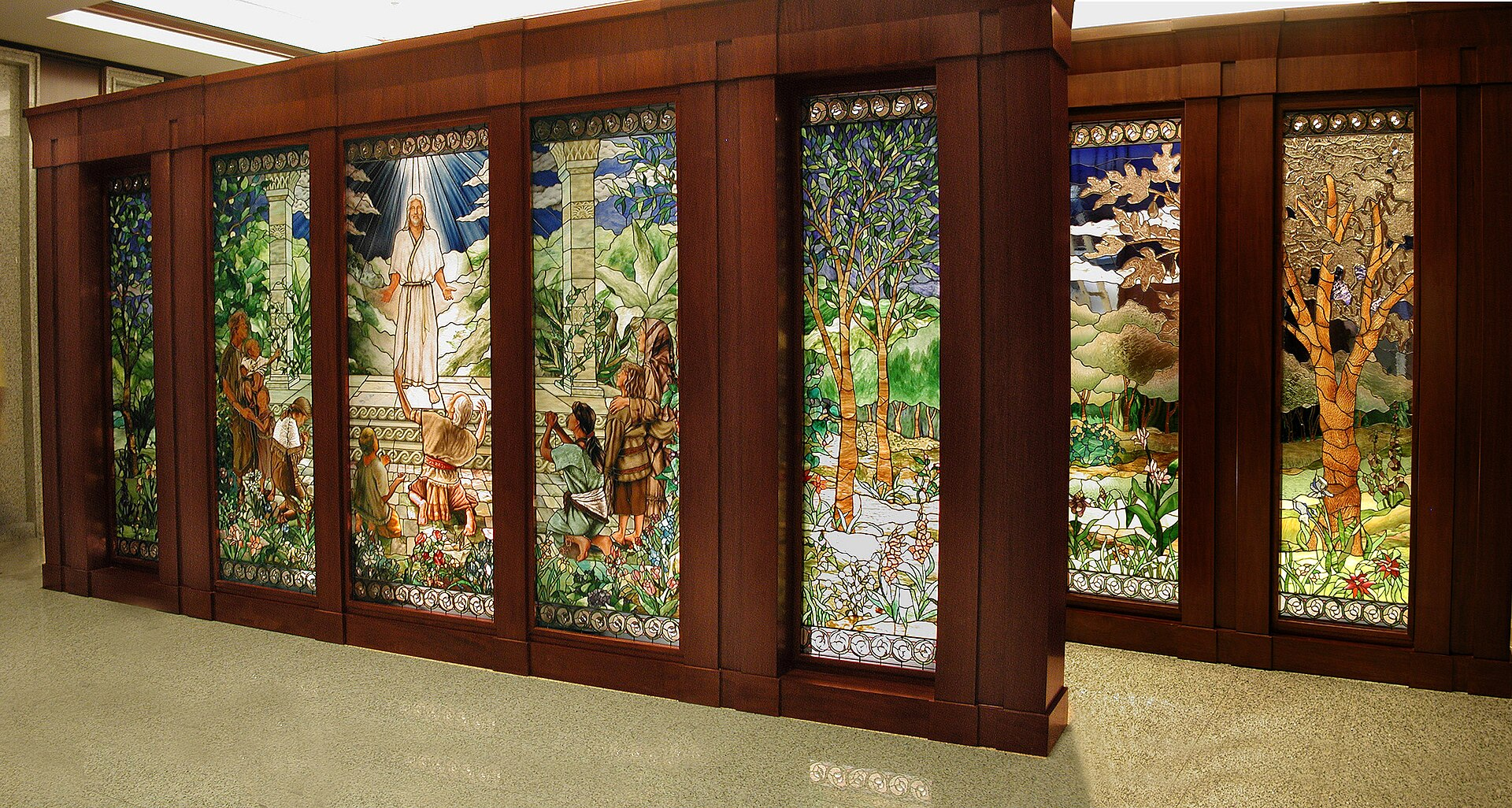
“Tree of Life” at Holdman Studios, Lehi, UT, Author Rojochampion, (CC-SA 4.0 International)
The following post is excerpted from the website Walking the Path https://donwhiteblog.com/2026/05/19/why-greek/. The full text can be found there.
“God so loved the world that he gave humanity free will. Humanity used that freedom to choose the Tree of the Knowledge of Good and Evil, the desire to independently decide right from wrong. In response, God gave scripture: first, the Old Testament in Hebrew; then, at the appointed time, the New Testament in Greek. These two testaments are as different from each other as the two trees in the Garden.
That difference is bigger than vocabulary. Hebrew and Greek don’t merely use different words. They operate on entirely different ways of thinking about reality. When the New Testament writers expressed Torah ideas in Greek, they weren’t simply translating. From a Jewish legal standpoint, they were fundamentally redirecting those ideas. And that was intentional…
By the time Jesus walked the earth, many Jews could read and write Greek before they could read and write Hebrew. This was no accident. The New Testament was never meant for one people or one nation. It was written for the entire world.
Four Example Words
1. Worship — proskuneō
The Greek word the New Testament uses to describe how people responded to Jesus was the same word Greeks and Romans used for bowing before a god or submitting to Caesar. Hebrew has no equivalent. The Torah strictly forbids that kind of prostrate worship directed at anyone other than God. So, from a strict Jewish legal perspective, the New Testament described people doing to Jesus precisely what was owed only to God. Jewish leaders who rejected Jesus as God’s Son called this idolatry, but that was the point.
2. Sabbath — melakhah
The Hebrew word for what is prohibited on Shabbat, melakhah, is a precise legal term. It doesn’t mean “work” in the ordinary sense. It refers to specific categories of creative activity, organized around distinctions of public and private space and exact time (sundown to sundown). Greek has no equivalent word or concept…
3. Peace — shalom vs. eirēnē
Shalom is not the absence of conflict. It is rooted in bitachon, trust, security, and confidence within a relationship. When a Jewish host says Shabbat Shalom and welcomes guests into his home, that is shalom: the safety of being received under someone’s protection, within a covenantal bond.
The Greek word eirēnē and the Roman concept of pax behind it meant something closer to: ‘the war is over, submit to the stronger power.’ After World War II, Britain and the United States proclaimed peace, but at first, Germany only felt defeat. Unlike armies, Jesus offers peace to all of mankind.
4. Love — ahavah vs. agape
In Hebrew, love (ahavah) is rooted in action and commitment, not feeling. Its root, hav (הָב), means “to give.” The word used in the Shema, the prayer recited twice daily, is v’ahavta, a term grounded in legal obligation. The rabbis taught that to love God is to keep his commandments. Love, in Hebrew, is something you do.
The Greek word agape describes something different: selfless, unconditional devotion, giving oneself entirely without expecting anything in return. The difference is like that between marriage (a legal covenant) and love (a devotion or feeling). One defines responsibilities. The other describes the heart behind them. God wants agape from us and calls us to offer it to one another.
The Big Picture
The Old Testament, written in Hebrew, reads like a contract, packed with rules, promises, and defined responsibilities. It is the legal agreement between God and those who chose to live by the Tree of the Knowledge of Good and Evil: knowing good and evil independently, and being held accountable accordingly.
The New Testament, written in Greek, takes that same relationship and reframes it. The New Testament writers heard from Jesus, the apostles, and the first followers of Jesus…In Greek, the legal weight gives way to something warmer: a Father who loves his children not because they earned it, but simply because love is who he is. The shift from Hebrew to Greek is the shift from law to grace, not because the law was wrong, but because God, not man, now handles all legal matters himself. There is the beginning of the shift from the Tree of the Knowledge of Good and Evil to the Tree of Life.
Those who dismiss the Jews or ignore the Old Testament will struggle to understand either the Father or the New Testament. Both trees were placed in the Garden by God. Both testaments reflect God’s single, unfolding plan. The New Testament writers stopped living as men of the world and began imitating the Son of God, the one sent to bring them, and us, back to the Father, who is the author of our love story.”
READERS CAN FIND MY VIEWS ON ABUSE AND ABUSE-RELATED ISSUES AT A Voice Reclaimed, Surviving Child Abuse and More
https://avoicereclaimed.com


Powerful. Informative ❤
Yes, I did not know this before I came across Don White’s post.
Amen 🙏 The more we study Scripture, the more we see God’s perfect plan unfolding from Genesis to Revelation. His law revealed our need, and His grace revealed His love through Christ. 🙏
Beautifully expressed, Willie.
A complex issue beautifully explained. Thank you, Anna.
A beautiful, and unbelievably timely post(for me), as I am currently working on a post about Old Testament relevancy in this New Testament era. Very informative and thank you for sharing, Anna.
So glad you enjoyed it.
A fascinating and insightful look into how the Spirit-inspired word of God utilizes the strengths and nuances of language to impress His truths in our hearts. Thank you, Anna.
The credit, of course, goes to Don White. I am not a student of Hebrew or Greek, myself.