“Fresh Face Doctrine” by Sandeep Dhawan
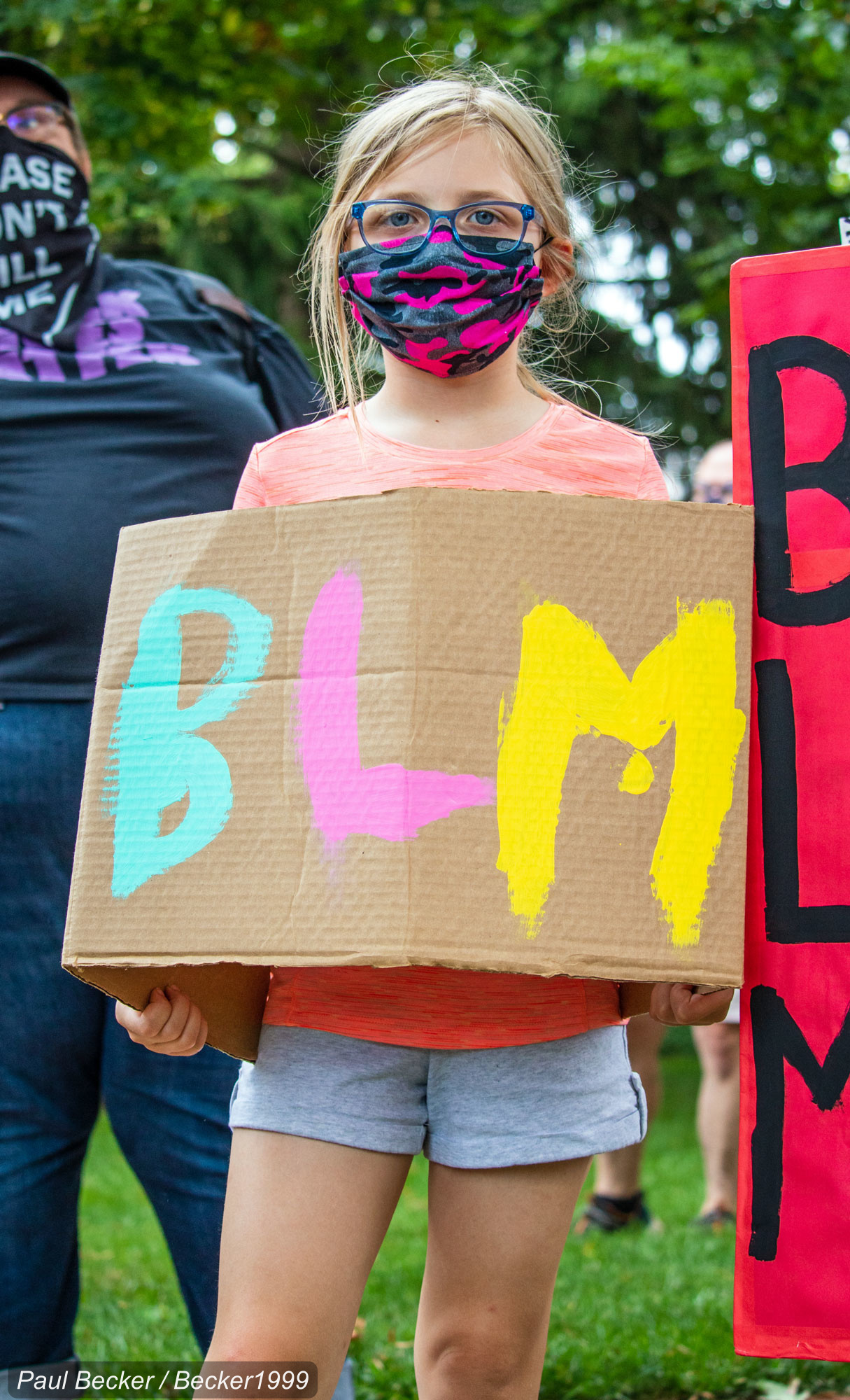
“Black Lives Matter” protester, Source https://www.flickr.com/photos/becker271/50267630671/ , Author Becker1999, Grove City, OH (CC Attribution 2.0 Generic)
The following post is excerpted from a warning directed at India. However, the warning applies equally well to the United States. The full post can be found at: https://insightful.co.in/2026/06/11/fresh-face-infestation-is-india-ready-for-the-onslaught/ . Headings have been added here for the reader’s convenience.
“…The ‘Fresh Face Doctrine’ refers to young people who are sincere, idealistic, and eager to do something meaningful for their country. They are often intelligent, outspoken, and full of energy. These qualities make them attractive to activists, political operators, foreign agencies, and other groups that want to influence public opinion. Their weakness is not ignorance in the ordinary sense; it is trust, passion, and a strong desire to belong to something bigger than themselves.
This vulnerability becomes more dangerous in the age of the internet and social media. In the past, radicalization was slower and more local. Today, ideas can spread instantly, and emotional messages can be amplified at scale. Artificial intelligence has made this even more powerful by allowing manipulation to be highly targeted, highly personalized, and difficult to detect…
Youth who are still forming their worldview can be shaped very easily. A person who genuinely wants justice or reform can be pushed into becoming a tool for someone else’s agenda without fully realizing it.
The Intermediaries
The transition from an idealistic young person to an exploited participant usually does not happen through force. It happens through trusted intermediaries. These are the people who stand between the handler and the target: professors, NGO leaders, artists, celebrities, student organizers, and social media influencers. They do not need to act openly like recruiters. Instead, they create trust, emotional attachment, and the feeling that the Fresh Face is part of a special moral mission.
[A. Universities]
Universities are one of the easiest places to begin. Students are taught to respect expertise, so professors often have enormous influence. That influence can be exercised subtly through reading lists, grading patterns, classroom norms, and the silent reward of ideological conformity. A student may think they are simply learning, when in reality they are being shaped toward a fixed political view.
[B. Personal Attention/Grooming]
Personal attention is another powerful tool. When a leader or mentor gives praise, invites a student into a private circle, or offers the feeling of belonging, it creates a sense of obligation. Later, when that same person asks for risky political action — attending a protest, spreading a message, or helping organize a campus cell — refusal feels like betrayal. The Fresh Face does not want to disappoint someone they admire, so they comply.
[C. Isolation and Peer Pressure]
This process becomes more effective when the target is isolated from older stabilizing influences such as family or independent mentors. Specialized seminars, activist circles, and tightly controlled peer groups create a closed environment where one message dominates. Once everyone around a student seems to agree, doubt begins to feel abnormal. What looks like consensus is often only engineered repetition.
[D. Influencers]
Celebrities, writers, and artists add another layer. Their role is not to argue a case, but to make a cause feel emotionally attractive. A moving speech, a dramatic poem, a powerful song, or a viral post can make a movement seem fashionable, righteous, and morally urgent. The Fresh Face may not study the long-term consequences of the movement. They may simply feel that joining it is the right, modern, and socially approved thing to do. In that sense, celebrity endorsement works much like brand marketing: it packages a complex political cause into a lifestyle identity.
[Hidden Agenda]
Behind this polished surface is the financial machinery of the civil society sector. Many NGOs do real and necessary work, but some become dependent on constant funding from domestic or foreign sources. Once an organization depends on outside money, it must often align itself with the priorities of its donors. That means student energy, moral language, and public concern can all be redirected toward the agenda of whoever controls the funding.
The most dangerous result is when all these forces combine to create a fixed moral divide. The movement defines itself as righteous ‘us’ fighting corrupt ‘them.’ Once a student accepts that framework, they stop asking hard questions. Any criticism of funding sources, foreign influence, or political manipulation is dismissed as propaganda. At that point, the Fresh Face is no longer thinking independently. They are being guided by a story built for them.
The Providers
A campaign of this kind cannot survive without money. To keep influence networks running while avoiding scrutiny, hostile actors use several channels to move funds and resources….
Shell charities, front organizations, and seemingly harmless educational trusts can absorb money meant for social spending. Corporations may believe they are funding legitimate development or welfare work, while the money is quietly redirected toward politicized campaigns, recruitment drives, or influence operations…
The newest tool is cryptocurrency. Privacy-focused digital assets, mixers, and decentralized wallets can move money quickly and across borders with limited visibility. This creates a borderless funding stream that can support digital propaganda, local organizers, and politically aligned field activity in near real time. Shell companies can be used to disguise the real origin of the money. By the time the funds emerge in the local system, they look clean enough to support long-term activism and agitation…
The Game Plan
The manipulation of the Fresh Face usually follows a clear psychological sequence. It begins with basic human shortcuts that are useful in daily life but dangerous when exploited.
[A. Reciprocation]
The first shortcut is reciprocation. If a campus group offers free food, workshops, mentorship, or emotional support, it feels generous. But it also creates a subtle sense of debt. Later, when the same group asks for a favor, the student feels pressured to say yes.
[B. Commitment and Consistency]
The second shortcut is commitment and consistency. Once a young person signs a petition, posts a slogan, or attends a minor protest, they have already identified themselves publicly. After that, it becomes harder to step back. Saying no to the next request would feel like admitting that the first one was a mistake.
[C. Social Confirmation]
The third shortcut is social proof. Students often look at the behavior of their peers to decide what is normal. If everyone in their circle is marching, posting, chanting, or repeating the same message, the individual begins to assume that the cause must be right. Doubt weakens under the pressure of collective energy…
A charming peer can lower resistance faster than an aggressive recruiter, and a respected professor or activist can make a view seem intellectually superior. Young people often assume that the people with status must know something they do not. That assumption is exactly what handlers use.
[D. Urgency]
Scarcity adds urgency. If a movement is framed as a once-in-history moment, people feel that hesitation will cause disaster. ‘Act now or lose everything’ is a powerful message because it bypasses patience and reflection. It pushes the Fresh Face toward immediate emotional action.
[E. Unity/Belonging]
In the end, unity becomes the strongest tool of all. A person who feels part of a heroic moral mission will often stop checking facts carefully. Once the movement becomes part of their identity, criticism feels like betrayal. The result is a closed mental loop where group loyalty replaces independent judgment…
Building the Story
Manipulators rarely rely on one universal message. They adapt their narratives to local fears, regional identities, and historical grievances. In one place, they may use language and cultural pride. In another, they may use religion, caste, or ethnic tension. The goal is always the same: turn real social anxieties into political fuel…
Student movements are especially useful because campuses bring together energy, idealism, and a sense of moral urgency. When student unrest is linked to larger political goals, it can become a launchpad for agitation far beyond the campus. The student no longer sees themselves as simply protesting. They begin to see themselves as part of a historic struggle.
Religious division is even more explosive. When Hindus, Muslims, Christians, or Sikhs are framed as existential threats to one another, the emotional temperature rises quickly. Once fear takes over, rational debate becomes much harder. In that environment, handlers can play both sides and guide people toward confrontation, violence, and long-term distrust…
The Fresh Face is more likely to believe the story that feels urgent than the data that feels dry. That is why false narratives can survive even when they are objectively weak.
Technology and Propaganda
Old propaganda used posters, speeches, newspapers, and rallies. Modern propaganda uses algorithms, automation, and artificial intelligence. This is what makes it so dangerous. It does not just broadcast a message; it studies each person and attacks the part of the mind most likely to respond.
Deepfakes and synthetic voice systems can imitate trusted leaders, making lies look real. Machine learning can identify what a person fears, envies, or admires, and then serve content that triggers those emotions. Social platforms can amplify outrage, create echo chambers, and keep users trapped inside a loop of reinforcing narratives.
This is not just about persuading people to accept one false version of events. In many cases, the goal is to destroy the idea of objective truth itself. If everyone is confused, exhausted, and angry, then no one knows what to believe. That condition is useful for political actors who want to weaken institutions and control the direction of public debate…
The Social Result
When people are constantly exposed to confusion, outrage, and contradiction, they begin to lose faith in institutions. They stop trusting media, government, schools, and even facts themselves. That creates a vacuum that mass movements are eager to fill.
…Frustrated individuals stop seeing themselves as isolated and powerless. They seek belonging in a movement that offers certainty, purpose, and identity. The movement does not need to solve their problems completely. It only needs to give them a place to stand.
This is how the Fresh Face is fully absorbed. They no longer join because they have carefully studied the issue. They join because they want unity, purpose, and moral clarity. The movement gives them a sense of self, and in return they surrender their ability to question it…
Ultimately, the strongest defense lies in psychological immunity, requiring educational institutions to introduce cognitive security and media literacy into their core student orientation frameworks. The supply chain of the ‘Fresh Face’ is unlimited. Before they are exposed to curated ideological environments, they must be trained to recognize how their natural desire for unity, validation, and purpose can be weaponized against them by funded handlers or charismatic influencers…”
READERS CAN FIND MY VIEWS ON ABUSE AND ABUSE-RELATED ISSUES AT A Voice Reclaimed, Surviving Child Abuse and More
https://avoicereclaimed.com


Thanks, Anna, for this ‘fresh’ face post. I found it informative and challenging. Our children and grandchildren are so vulnerable to these subtle influences…
It seems that ‘objective truth’ has largely been silenced in our world and even the ‘Church’ at large… Oh, for another Francis Schaeffer today!
I agree, Erroll. Our young people are at great risk. That objective truth has been silenced contributes to this.
.
Good post, Anna. It goes along well with a post I’ve been working on about scammers. It’s all the same thing, psychological and emotional abuse, manipulating people for your own nefarious purposes. Back in the day, at least in movies and novels, the CIA would refer to these people as, “useful idiots.” That’s unkind perhaps, but it is a good reminder for why it is so important to learn to think critically and to question authority, especially group authority. I’m certainly not blaming anyone, but I do think the term says something important about how these people don’t value you, how you are being exploited as a means to an end at which point you become disposable. It’s a one sided relationship.
Well said, Gabrielle. I fear not only our young people are susceptible to such deception. An increasing number now support democratic socialism, for instance. SMH.
Thanks for sharing this Anna, I learned about some things I had not considered before. Your post certainly brings to light the power of manipulation, and we are surely seeing it in abundance today!
I fear Sandeep Dhawan has described all too accurately what is happening to our young people. Without the concept of objective truth and a biblical foundation, they are vulnerable to such manipulation.
Very informative article and so true. I have had many an “argument” with my teenage grandchildren around the family dinner table, where junior and secondary schools, not just universities, seemed to be more intent on politics and “social justice” rather than education.
Thank you, Anna, for explaining this doctrine so thoroughly. To be honest, I think the doctrine has no age limit. Many adults are easily influenced as well with a steady diet of the same things that garner the fresh-faced young. We all need a sold ballast of Christ-centered thinking and living to keep us from becoming pawns in the world’s deceptive practices.
So right, Dora. Our anchor is Christ.