Transubstantiation, Part 2 – The Protestant View
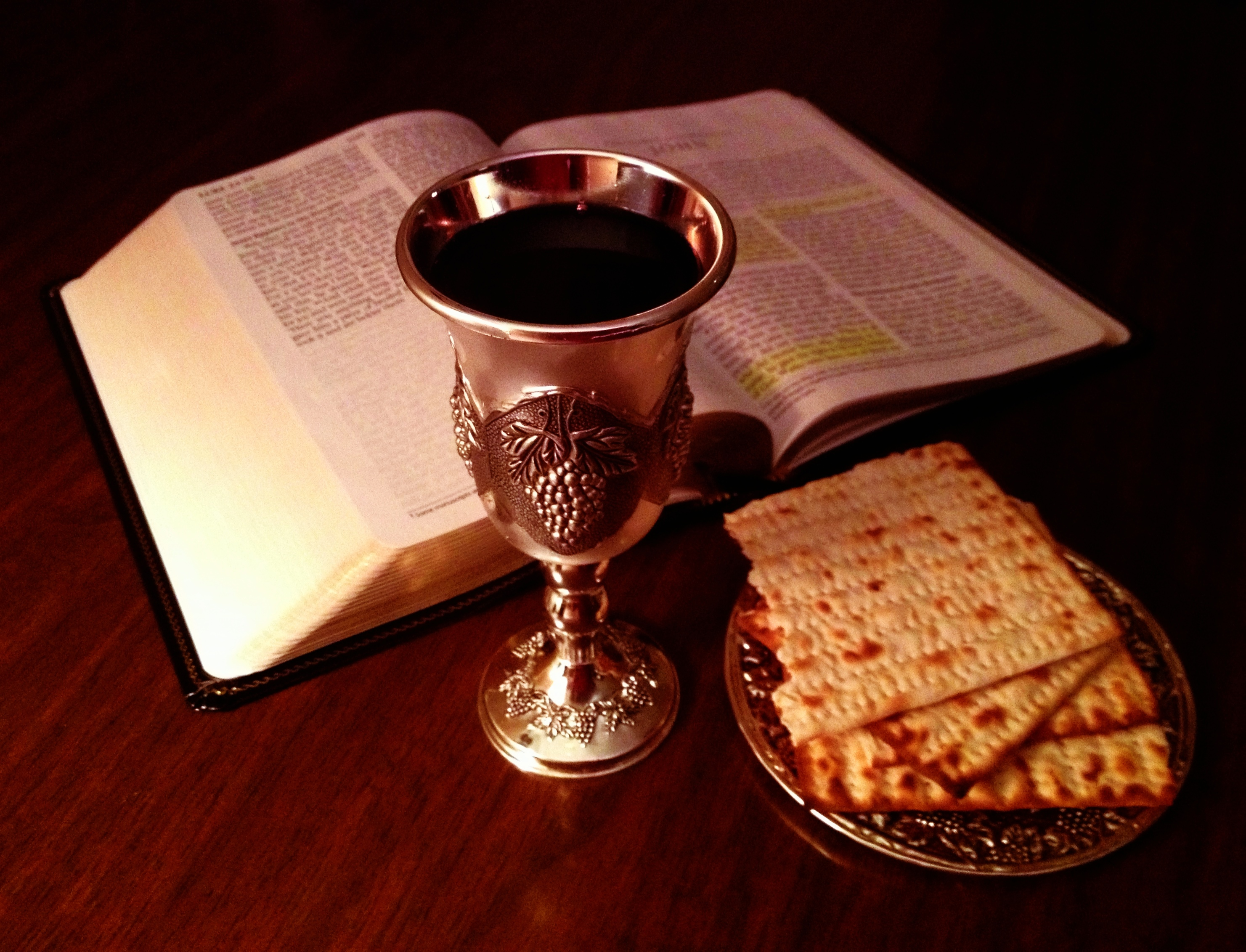
The Lord’s Table, Image Author John Snyder (CC BY-SA 3.0 Unported)
We continue our examination of the reasons Christian denominations either believe in transubstantiation (the substantive change of the communion bread and wine into the body and blood of Christ) or do not believe.
As already mentioned, the various Protestant denominations do not believe in transubstantiation. In their view, the “eats My flesh and drinks My blood” statement (Matt. 26: 26-28) is a metaphor; not a call to literal consumption, but to spiritual union with Christ [1][9].
Protestant Teaching
Lutherans hold that Christ’s body and blood are truly present “in, with, and under” the elements of bread and wine. This is not a change of substance as in transubstantiation, but a union of Christ’s presence with the elements [2].
Anglicans/Episcopalians believe that Christians partake in the body and blood of Christ in a spiritual manner. They use the term “consubstantiation” for this [3][4][14].
Reformed/Calvinists emphasize a spiritual presence, not a physical change of substance [5][15]. Methodists, also, take this approach [11][12].
Several Christian groups (some Baptists, Anabaptists including Mennonites, Pentecostals, some Restorationists including Jehovah’s Witnesses, Unitarians, most non-denominational churches, and some liberal churches) hold a “memorialist” view that the bread and wine are merely symbolic reminders of the Last Supper and Christ’s sacrifice, rather than containing His real or spiritual presence [6].
Scriptural Basis
The “eats My flesh and drinks My blood” statement by Christ was made after He had fed the 5000 (John 6: 1-13). Seeking physical bread, the crowds continued to follow Him. But Christ pointed out the food He would give them would endure to eternal life (John 6: 27).
Three times Christ identified Himself with spiritual bread (John 6: 35, 48, 61). Christ made clear that He was speaking metaphorically about this when He said, “The Spirit gives life; the flesh counts for nothing. The words I have spoken to you – they are full of the Spirit and life” (John 6: 63). He emphasized at the same time that the key to Salvation is faith (John 6: 40, 47).
While tempted in the wilderness, Christ had earlier said, “It is written: ‘Man shall not live by bread alone, but by every word that proceeds from the mouth of God‘” (Matt. 4: 4, citing Deut. 8: 3).
Those who could not make the transition from physical to spiritual food turned their backs on Christ and walked away (John 6: 66).
In the Old Testament, a “thank offering” like that at the Passover meal was made after delivery from great danger or death [7][8]. The Last Supper was such a Passover meal. The Apostles’ act of eating and drinking was symbolic of their faith in Christ. When they later gathered together for a Eucharistic meal they would “proclaim the Lord’s death” until His return (1 Cor. 11: 26).
The Eucharist both celebrates Christ’s victory over death and commemorates the New Covenant, inaugurated at the Last Supper.
History
During the Protestant Reformation the doctrine of transubstantiation was highly criticized as incorporating Aristotelian “pseudophilosophy” into church teaching [10A].
As Martin Luther put it, “It is not the doctrine of transubstantiation which is to be believed, but simply that Christ really is present at the Eucharist” [10B]. However, in his 1523 treatise The Adoration of the Sacrament Luther defended the adoration of the body and blood of Christ in the Eucharist.
Hulrych Zwingli in his “Account of Faith” to Emperor Charles V said, “I believe that in the holy Eucharist, i.e., the supper of thanksgiving, the true body of Christ is present by the contemplation of faith… [T]hat the body of Christ in essence and really, i.e., the natural body itself, is either present in the supper or masticated with our mouth and teeth… we not only deny, but constantly maintain to be an error, contrary to the Word of God” [13].
Summary
In the desert Tabernacle and Temple, the twelve loaves of showbread known as the “bread of Presence” were a physical representation for the Israelites of a spiritual reality, i.e. the actual presence of God.
Roman Catholics and Eastern Orthodox view the bread of Presence as having foreshadowed the Eucharist. Protestants view the bread of Presence as having been replaced by the spiritual bread that abides within us through the Holy Spirit.
—
[1] Got Questions, “What did Jesus mean when He said we must eat His flesh and drink His blood?”, https://www.gotquestions.org/Jesus-eat-flesh-drink-blood.html.
[2] Vectree, “Comparison of Transubstantiation and Sacramental Union in Eucharistic Theology”, file:///C:/Users/Anna%20Waldherr/Downloads/vectree-eucharistic-theological-comparison.pdf.
[3] Christianity Faq, “Do Episcopalians Believe in Transubstantiation?” by Daniel Joseph 10/21/22, https://christianityfaq.com/do-episcopalians-believe-in-transubstantiation/.
[4] Catholic Answers, “Do any other faiths believe in transubstantiation?”, https://www.catholic.com/qa/do-any-other-faiths-believe-in-transubstantiation.
[5] Epistle Bliss, “Do Any Protestant Denominations Believe in Transubstantiation?”, 6/20/26, https://epistlebliss.com/blogs/protestants/do-any-protestant-denominations-believe-in-transubstantiation.
[6] Wikipedia, “Memorialism”, https://en.wikipedia.org/wiki/Memorialism.
[7] Chabad, “Appreciation”, https://www.chabad.org/parshah/article_cdo/aid/373048/jewish/Appreciation.htm.
[8] Wikipedia, “Thank offering”, https://en.wikipedia.org/wiki/Thank_offering.
[9] Christianity Faq, “Why Don’t Protestants Believe in Transubstantiation?” by Daniel Isaac Joseph, 8/24/21, https://christianityfaq.com/why-dont-protestants-believe-in-transubstantiation/.
[10A and 10B] Wikipedia, “Transubstantiation”, https://en.wikipedia.org/wiki/Transubstantiation.
[11] Christianity Stack Exchange, “What was John Wesley’s view of the Lord’s Supper?”, https://christianity.stackexchange.com/questions/42615/what-was-john-wesleys-view-of-the-lords-supper.
[12] Epistle Bliss, “Do Methodists Believe in Transubstantiation?”, https://epistlebliss.com/blogs/methodists/do-methodists-believe-in-transubstantiation.
[13] Historical Christian Faith, “Huldrych Zwingli on the Real Presence of Christ in the Eucharist”, https://www.historicalchristian.faith/doctrine/doctrines/real-presence/ulrich-zwingli.html.
[14] Church of the Incarnation, “Do Anglicans Believe in Transubstantiation?” by Rev. Steven Breedlove, https://incarnationrichmond.org/resources/ask-the-church/2025/09/17/transubstantiation.
[15] Calvin’s Institutes, “Chapter 17. Of the Lord’s Supper and the Benefits Conferred by It”, https://ccel.org/ccel/calvin/institutes/institutes.vi.xviii.html.
Part 1 The Roman Catholic and Eastern Orthodox View was posted 11/22/26.
READERS CAN FIND MY VIEWS ON ABUSE AND ABUSE-RELATED ISSUES AT A Voice Reclaimed, Surviving Child Abuse and More
https://avoicereclaimed.com


