
“Martyrdom of St. Stephen” by Bernardo Cavallino (c. 1645), Prado Museum (Accession No. P07466), Source Web Gallery of Art (PD)
There is a popular series on the History Channel called “Vikings”. Historical fiction, the series attempts to re-create the Viking worldview, as it existed before the adoption of Christianity.
The series treats the pagan beliefs of the Vikings with respect. It goes to great lengths to portray pagan rituals (including human sacrifice) accurately, and in a positive light. By contrast, scripts tend to portray Christian characters as weak, hypocritical and/or corrupt.
Interestingly, Ragnar, a central character, privately describes himself as an atheist toward the end of his life. This is far outside the Norse sagas from which the series claims to derive.
It should come as no surprise that Christian beliefs are often attacked by non-believers. On the scale of offense, “Vikings” barely registers. We are routinely labeled as ignorant, backward, foolish, and deluded; our beliefs as derivative, misleading, even cruel [1].
Our Existence an Offense
Why should it matter to atheists what Christians believe? What would it matter, if we believed in “little green men” [2]? Yet our very existence is offensive to atheists.
“For we are unto God a sweet savor of Christ, in them that are saved, and in them that perish: To the one we are the savor of death unto death; and to the other the savor of life unto life” (2 Cor. 2: 15-16).
The answer, of course, is simple. Satan attacks the truth. He does not bother to attack the lies he, himself, has fostered and spread.
The Reason for Our Hope
Many of those responding to such public attacks on Christianity are knowledgeable; their arguments, intelligent and well-reasoned. All this is to the good.
We should be ready to defend our faith, when needed:
“Always be prepared to articulate a defense to everyone who asks you to give the reason for the hope that you have. But respond with gentleness and respect, keeping a clear conscience, so that those who slander you will be put to shame by your good behavior in Christ” (1 Peter 3: 15-16).
A Superior Attitude
Unfortunately, a superior attitude often creeps in. This may feel justified, in human terms. There may be Christian readers cheering on the sidelines. But that is not how it should be. Read more…
“Then all the elders of Israel gathered together and came to Samuel at Ramah, and said to him, ‘Look, you are old, and your sons do not walk in your ways. Now make us a king to judge us like all the nations.’
But the thing displeased Samuel…So Samuel prayed to the Lord. And the Lord said to Samuel, ‘Heed the voice of the people…for they have not rejected you, but they have rejected Me…However, you shall solemnly forewarn them, and show them the behavior of the king who will reign over them’ “ (1 Sam. 8: 4-7, 9).
When the nation of Israel demanded a king, it got the petulant ruler, Saul – a man who was rash and mercurial; vain and jealous; suspicious and insecure.
The United States has elected a president who is remarkably similar. Many voters felt they had no other choice.
Economic Motivation
For some, their reasons were economic:
These voters felt overlooked by Washington insiders, their feckless representatives; excluded from the table, when trade deals and treaties were negotiated for the benefit of corporate giants.
These Americans were left out of the equation, when the benefits of technology were calculated – mere numbers on a page, when jobs were outsourced; casualties of globalization, so that fortunes could be made by a select few.
Racist Motivation
“Before the election, I went to Pennsylvania…and sat in the homes of Trump voters…I saw mixed motives and some blind spots…But I also found incredible…decency and honor among the Trump voters. Many of them were holding their nose to vote for Trump. They were not endorsing every crazy thing that he said…There are definitely some Trump voters who are energized by…the inflammatory comments against Muslims and Mexican immigrants and black protestors. But there’s a much larger group that find those comments distasteful, just not disqualifying.”
– Esquire Magazine, “Van Jones Refuses to Give Liberals a Free Pass” by Britt Julious, 12/6/16, http://www.esquire.com/news-politics/a51206/van-jones-interview/
The majority of those who voted to elect Pres. Donald J. Trump may not hold racist beliefs [1]. But the campaign disclosed a deeper racial rift among Americans than had previously been acknowledged. Read more…

“The valley of the shadow of death” (1855), Photo of Crimean War by Roger Fenton, Library of Congress (Reproduction No. LC-DIG-ppmsca-35546) (PD)
“For the resolutions of the just depend rather on the grace of God than on their own wisdom; and in Him they always put their trust, whatever they take in hand. For man proposes, but God disposes; neither is the way of man in his own hands.”
– Of the Imitation of Christ by Thomas a Kempis (c. 1425)
There are those who will loudly proclaim we have only to ask for God’s blessing on our plans to see them fulfilled [1]. I am not among these.
Those who hear God audibly or on a regular schedule have led very different lives from mine. I do not doubt their experience; I do not contest their claims. I can only say that some of us have known the valley of the shadow [2].
Impassable
Despite the best of intentions, despite the most sincere prayers, we may start out with Plan A only to find the road impassable, our way blocked. To our surprise, we learn that God has Plan B in mind for our development.
How we respond will determine our progress on the path toward sanctification.
Detours
The Apostle Paul understood that his mission was ultimately to witness in Rome (Acts 23: 11). But during his ministry Paul was shipwrecked at least four times, stoned, beaten three times with rods, and five different times received 40 lashes (2 Cor. 11: 23-28).
Surely, the will of the Almighty was not thwarted when these events occurred. One must assume that these “detours” were part of God’s plan – events subject to what some term His permissive will, if not His perfect will (Rom. 12: 2) [3] [4]. They have served as inspiration to the faithful for the past 2000 years.
At great personal risk, Corrie ten Boom and her family courageously aided Jews in escaping the Holocaust. Corrie, also, watched her beloved sister, Betsie, die in a concentration camp.
Surely, that was not the outcome this great woman of faith would have chosen, either for her sister or herself. Yet Corrie ten Boom continued to trust her life to God.
God’s Silence
Many of us have longed for God’s voice, and His direction for our lives. Most of us have cried out to Him in our distress.
We may occasionally have been tone deaf; may have overlooked the signs. But that was not for lack of trying. God is, at times, simply silent. He may choose not to reveal His plans to us, or choose not to reveal them in all their fullness.
This does not mean that He is absent from our lives. Read more…
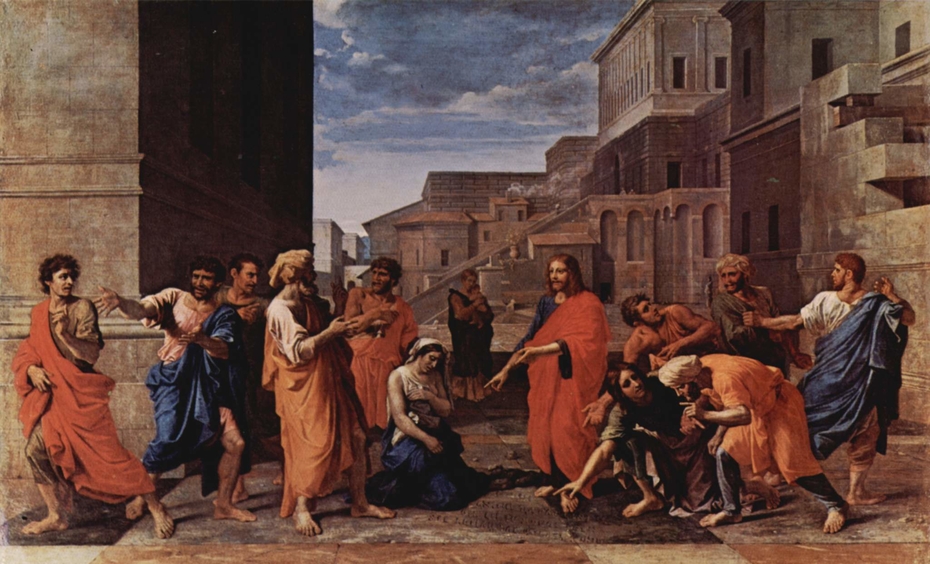
“Christ and the Woman Taken in Adultery” by Nicholas Poussin (1635), Location Louvre Museum, Paris, Source https://useum.org/, (PD-Art, PD-Old)
In flagrante delicto (adverb): In the very act of wrongdoing, especially in an act of sexual misconduct.
The Latin phrase in flagrante delicto is a legal term used to convey that a criminal was caught red-handed. The woman caught in adultery, and brought before Christ for judgment, was caught in the act (John 8: 3-11).
We do not know her name or what she looked like. We do not know the name of the man caught with her. He seems to have escaped the consequences of his actions, at least as far as the Scripture story is concerned. Perhaps the crowd let him go. Yet his guilt was equal to hers, and should have merited the same punishment.
“The man who commits adultery with another man’s wife, he who commits adultery with his neighbor’s wife, the adulterer and the adulteress, shall surely be put to death” (Lev. 20: 10).
This woman must have thought her lover would defend her, if their secret were ever revealed. Not only were they caught in the act of what she may have mistaken for love (a relationship for which she had risked her life); she was abandoned at the very moment of intimacy, and cruelly left to her fate.
Perhaps initially defiant, she must have been terrified by the time the crowd reached Christ.
The First Stone
What we should remember from the story is the mercy Christ extended to this woman. You will recall that He said to the crowd bent on stoning her, “He who is without sin among you, let him throw a stone at her first” (John 8: 7).
One by one, the members of the crowd drifted away, convicted of their own sins. Read more…

“Bald Eagle” sculpture by David Turner, Newport University, Newport News, VA, Author Tony Alter (CC BY-SA 2.0 Generic)
Eagles are powerful birds, capable of flying to heights of 15,000 feet or more. They can achieve speeds of 30-35 mph in flight. Adults have a seven foot wingspan. Fierce and strong, eagles are not afraid to share rising thermals with hang gliders.
The bald eagle was selected as the emblem of the United States in 1782 when the Great Seal was adopted. That a great nation would choose such a symbol is understandable. How we — who struggle with daily trials, large and small — might gain wings like those of eagles is more difficult to comprehend.
The car refuses to start the morning of a badly needed job interview. The children have outgrown their shoes again. Desperate for help, she sits on hold for an hour with some agency. He is suddenly coughing up blood. The list of trials is endless. We can begin to feel as insignificant as dust motes in a hurricane. Read more…

Homeless in Brazil, Author Henrique Pinto, Source Flickr (CC Attribution 2.0 Generic)
At Christmas, we like to think of Christ as an infant – cute, cuddly, and harmless. No confrontations with the Pharisees. No challenges for us.
The glossy pictures on our Christmas cards do not, however, tell the whole story. Christ was born to save us from sin. He took on flesh and a human nature for that lofty purpose. But He chose to be born into poverty, when the riches of the world were available to Him.
Not much has changed for the poor, in the interim. I ask that you keep them in mind this Christmas, and throughout the coming year. Christ does. He was one of them.
We know from the Bible that both shoes and sandals were in use in Jesus’ day. Ordinary people might go barefoot at times, but the absence of shoes could, also, be symbolic – whether of respect, deprivation, shame, or the transfer of property, depending on context.
These are the words God spoke to Moses, as he approached the burning bush:
“ ‘Do not draw near this place. Take your sandals off your feet, for the place where you stand is holy ground’ ” (Ex. 3: 5).
Compare them with the words of the prophet, Amos, regarding the sins of Israel:
“Thus says the Lord: … ‘[T]hey sell the righteous for silver, and the needy for a pair of shoes’ ” (Amos 2:6).
Amos lived over 700 years before Christ, but his words still resonate with us [1].
Designer Shoes
What do shoes say about our own culture? Modern designer shoes can cost as much as a house or car payment – this when homes are in foreclosure, and “reality” shows depict repossession by way of entertainment [2]. Shoes have been wrapped in platinum fabric and studded with actual rubies or diamonds, running into the millions.
Shoes and Crippling Illness
Nearly half the world’s population exists on less than $2.50 per day. Many will never own a single pair of shoes. Two billion of our brothers and sisters suffer from painful, crippling, and potentially fatal parasitic diseases that could have been prevented (or their frequency reduced) by shoes alone.
Here are a few:
- Podoconiosis (a form of elephantiasis) arises when silica penetrates the skin of barefoot farm workers. It is found in Ethiopia, Rwanda, Tanzania, and elsewhere.
- Tungiasis penetrates the skin of those wading, washing, or swimming in infected water. The parasite, found in tropical Africa, causes painful swelling of the toes and feet. This can progress to gangrene and death.
- Hookworm causes diarrhea, abdominal pain, and weight loss (in children, often retarding growth). Hookworm can be found in South America, Europe, Asia, and Africa.
- Schistosomiasis causes cough, muscle aches, fever, and chills. Repeated infections can damage the liver, lungs, bladder, and intestines. The disease is particularly prevalent in school children.
The relationship of poverty, limited access to education, and illness has been widely documented by UNICEF and other organizations. Samaritan’s Feet International http://www.samaritansfeet.org/ has taken on the ambitious mission of providing shoes to destitute children and adults worldwide. Read more…
Archbishop Fulton J. Sheen – a great speaker and profound Christian writer, since passed on to his reward – said of paganism that it created idols out of man’s burning desire to see the gods face to face, to “force” them into this broken world of ours and hold them accountable.
As Christians, we know that man’s desire to see God in the flesh was at last fulfilled in the Person of Jesus Christ. We know that sin is the result of human action, but that the penalty for sin was paid through God’s action. The difference in viewpoint is crucial.
Jesus, Himself, explained that the righteous will ask at the Final Judgment:
“Lord, when did we see You hungry and feed You, or thirsty and give You drink? When did we see You a stranger and take You in, or naked and clothe You? Or when did we see You sick, or in prison, and come to You?” (Matt. 25: 37-39).
And He will reply, “…inasmuch as you did it to one of the least of these…you did it to Me” (Matt. 25: 40).
This then is the crux: we glorify God by serving others, for God is already here.
That this is a broken world is no indication we have been abandoned to it. Rather, we see His image in the face of every child left home alone by a working single mother. We see Him in the face of an injured laborer, as well as that of an abused woman.
We see Him through anguish and tears. We see Him despite fear, embarrassment or shame.
We need no idols. Our God is here, among us, in this fallen world. No stench of sin is great enough to keep Him away. He extends His hand of mercy, as no lesser god could.
May He use us as His instruments.
Originally posted 3/8/12
READERS CAN FIND MY VIEWS ON ABUSE AND ABUSE-RELATED ISSUES AT ANNA WALDHERR A Voice Reclaimed, Surviving Child Abuse
https://avoicereclaimed.com
This is an update from Christian Legal Clinics of Philadelphia (CLCP), a non-profit I had a small part in launching years ago. The volunteer attorneys who continue to serve the poor of Philadelphia are amazing. Here are just two of their stories [1].
…To preach good tidings to the poor…to heal the brokenhearted, To proclaim liberty to the captives…” (Isaiah 61: 1).
The Men and Women We Serve
 “Ms. Eva Rodriguez came to us for help. Earlier this year, she became entangled in a case where her aggressor filed a criminal complaint after she had responded in self-protection to his hostility. Through our attorneys’ involvement, the criminal charges were dropped.
For Mr. Luiz Rivera, family is his number one 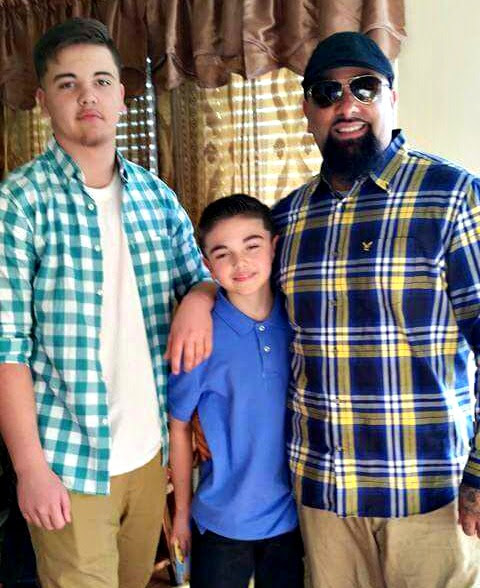 priority, and a matter with child custody hindered him from being involved consistently. ‘First and foremost, I am a father,’ he said. ‘My boys are everything.’
From a son without a father-figure to a dad who has chosen to leave a different legacy for his teenage boys, Mr. Rivera found legal help through several of our attorneys.”
—
[1] These clients gave permission for their names and images to be used.
Donations may be made to CLCP at http://www.clcphila.org/ or mailed to Christian Legal Clinics of Philadelphia, 4455 N. 6th Street, Philadelphia, PA 19140
READERS CAN FIND MY VIEWS ON ABUSE AND ABUSE-RELATED ISSUES AT ANNA WALDHERR A Voice Reclaimed, Surviving Child Abuse
https://avoicereclaimed.com

“Return of the Prodigal” by Guercino (1651), Wloclawek Diocesan Museum (PD-Art l PD-Old-100)
“You number my wanderings;
Put my tears into Your bottle;
Are they not in Your book?” (Ps. 56:8).
The old hymn “Come Thou Fount of Every Blessing” was penned by Robert Robinson before the American Revolution. It contains the aching lyric, “Prone to wander, Lord, I feel it, prone to leave the God I love…”
The Bible speaks again and again of man’s wandering from the throne of God. For having murdered his brother, Cain was made a vagabond on the earth (Gen. 4:12). Hagar was sent to wander in the wilderness by Abraham (Gen. 21:14), at Sarah’s jealous urging (Gen. 21:10). Israel was caused to wander for forty years in the desert, for having offended God by little faith (Num. 32: 13). The Book of Job and Book of Psalms both characterize the wicked as wandering about in search of food (Job 15:23; Ps. 59:15).
Some four thousand years later, this flesh of ours longs to wander still. Read more…

Thanksgiving Dinner, Author Alcinoe (PD)
A fellow blogger shared this experience with me. It will bring tears to your eyes.
“I live in a low-income property with neighbors of varied disability. Years ago (now 8 or 10), I was in great distress for the man who lived below me – Tim had fairly well-managed schizophrenia, and kept to himself (shopping alone, going to weekly appointments alone).
However one day the local deputies came and took him away in cuffs (he’d missed a summons to appear) – I foolishly tried to explain that Tim was ill and they lied to me, saying he’d be taken where he could receive treatment.
Tim was probably gone a month, and it was nearing Thanksgiving. I recall standing out in the courtyard and saying, ‘Somebody needs to do something to help’ – as other neighbors just stared mutely at me. And then it was as though God spoke to me, ‘You are Somebody’. It was a turning point.
When Tim returned, I invited him to have Thanksgiving dinner upstairs with me. I knew little about him, though it was apparent that no one visited him. That dinner was a stretch for me, very emotional.
Tim was a very large man, ‘hygienically challenged’ with poor table manners, and didn’t speak much, though he was willing to answer my questions. His parents were dead, and he said he had a sister who phoned from time to time – that she had likely usurped his portion of their inheritance (she lived in a pricey area).
Then Tim said that his recent absence was related to a misunderstanding about a minor criminal issue – and that he’d been held in the county jail, where his eyeglasses had been withheld from him.
By this point, I couldn’t eat my meal and was trying not to burst into tears. He seemed very credible in the details he gave – not attempting to hide the criminal issue, when he could have omitted it.
During this time, as I would occasionally hear Tim screaming downstairs at the voices that were tormenting him, I would call him on the phone and gently ask if he was alright – did he need anything? That seemed to “break the circuit”, and he would be calm for the rest of the evening. Read more…


